The 9.9% Outlier: Why BC Cannabis Is Growing While the Rest of Canada Shrinks (2026)
By
TL;DR: In April 2026, British Columbia’s legal cannabis market grew 9.9% year over year while Alberta shrank 2.1% and the broader Canadian retail market continued its multi-quarter decline. BC is now nearly tied with Alberta for the #2 provincial market behind Ontario, and the reasons are unique to this province: 123 active micro-cultivator licences, a Direct Delivery program that lets craft growers ship straight to retailers, the most stable average item price in the country ($22.87 in April 2026), an edibles category up 34.6% year over year, and international demand for BC craft genetics from Germany, the UK, and Australia. This is a story about a regional cannabis market that is doing almost the exact opposite of what every other province in Canada is doing right now.
Walk into any cannabis policy conversation in Canada in 2026 and the mood is grim. Producers are filing for creditor protection. Ontario retailers are racing each other to the bottom on price. Headlines about consolidation, excise debt, and store closures have become a kind of background music for the industry. And then there is British Columbia, quietly putting up a 9.9% year-over-year sales increase in April 2026 while the rest of the country is shrinking.
That gap — between BC and everywhere else — is the most interesting number in Canadian cannabis right now. It is not a rounding error. It is not a one-month blip. It is the result of a specific set of decisions that BC has made about how cannabis gets grown, shipped, and sold, and it is starting to show up in the data in ways that are hard to ignore.
This is what is actually driving it.
The Numbers: BC vs Everyone Else (April 2026)
According to Headset’s April 2026 BC market report, British Columbia posted 9.9% YoY growth in retail cannabis sales. That alone would be a remarkable figure. In context, it becomes something more like an outlier event.
British Columbia: +9.9% YoY
Alberta: -2.1% YoY
Total Canadian legal retail: declining for multiple consecutive quarters
Average BC item price: $22.87 (down only $0.12 month over month — the most stable in the country)
BC edibles category: +34.6% YoY
BC share of national legal cannabis production: roughly 25%
For most of legalization’s first seven years, Ontario and Alberta have been the two market leaders by retail volume, with BC sitting in a respectable but distant third place. As of spring 2026, BC has closed almost the entire gap with Alberta and is approaching parity for the #2 spot.
That is not happening because Albertans are suddenly buying less weed. It is happening because BC has built a different kind of market — one that, for once, actually looks like the place it comes from.
Driver #1: 123 Micro-Cultivator Licences and a Real Craft Scene
Health Canada introduced micro-cultivator licences in 2018 as a way to let smaller, more agile growers participate in the legal market. The intent was to preserve some version of the legacy cannabis culture that had defined places like the Kootenays and Vancouver Island for decades. Most provinces did not take particular advantage of the licence class. British Columbia did.
As of 2026, BC hosts roughly 123 active micro-cultivator licences — by far the largest cluster in the country. Combined with 200+ standard licensed producers, that gives the province a unique two-tier production landscape: industrial-scale flower for value SKUs, and hand-tended craft flower for the premium end.
What that means for shoppers is that BC menus carry strains, growers, and cultivation styles that simply do not exist on Ontario or Alberta shelves at the same depth. Living-soil organic grows, hand-trimmed batches, small-batch hash and rosin, single-cultivar drops — these are not marketing terms in BC. They are grading-system features that map onto real cultivators in places like the Sunshine Coast, the Kootenays, Galiano Island, and Vancouver Island.
The cultural piece matters too. BC has had a continuous, recognisable cannabis identity since the 1970s. When legalization arrived, that identity did not have to be invented from scratch. It just had to be licensed.
The single most underappreciated piece of the BC story is a logistics program called Direct Delivery. Under it, smaller licensed producers and micro-cultivators can ship their products directly to BC retailers, bypassing the central provincial warehouse that has historically been a bottleneck for craft brands. The program is administered by the BC Ministry of Public Safety and Solicitor General’s Cannabis Secretariat.
Why does this matter for the data? Because for years, the way Canadian provincial cannabis distribution worked actively penalised small producers. Every pound a craft grower wanted to sell had to go to a provincial warehouse, get logged, get stored, get re-shipped — adding weeks to the journey and fees at every step. For a category like fresh-frozen hash rosin or a small-batch craft drop where freshness is the entire value proposition, that pipeline was lethal.
Direct Delivery shortened it. A grower on Vancouver Island can now press hash rosin on a Monday and have it on a Vancouver retailer’s shelf within days, not months. As StratCann has reported, fees in the program are still higher than craft producers would like, but the operational difference is real. Products taste better when they get to shelves faster, and BC consumers have noticed.
No other province has anything quite like it operating at this scale.
The average price per item in BC in April 2026 was $22.87, down only twelve cents month over month. That stability is, in its own quiet way, one of the most important numbers in the entire report.
Across most of Canada, average cannabis prices have been in steady decline since legalization — the result of oversupply, retail oversaturation, and a desperate race-to-the-bottom on shelf pricing. Producers receive as little as $3 per gram wholesale in some categories, and a sizeable portion of retail margin gets eaten by excise tax before anyone makes a dollar.
BC is the exception. The provincial market has settled into a price band that supports craft producers, micro-cultivators, and specialty SKUs without collapsing them into a single $4-a-gram bargain bin. The reason is partly cultural — BC consumers are willing to pay more for known craft brands — and partly structural, in that the province’s distribution model has not pushed quite as hard on margin compression as Ontario’s has.
Stable prices are a signal that supply and demand are roughly in balance. In a country where most cannabis markets are wildly out of balance one way or the other, that signal is rare.
The edibles category in BC grew 34.6% year over year in April 2026. Inside that number is something even more interesting: BC gummy dollar sales grew 38.7% while gummy unit sales fell 19.3%. That means consumers are buying fewer gummy packages — but paying more per package.
This is a classic premium up-trade. Two forces are driving it:
The March 2026 multi-pack rule change. Health Canada’s amendment removed the 10mg-THC-per-package cap (individual pieces are still capped at 10mg, but a single package can now hold multiple doses). The result is exactly what you would expect: a shift from one-tiny-gummy-per-bag packaging toward 100mg+ multi-piece packs.
Demographic shift. Women are now roughly 42% of cannabis consumers nationally and account for 57% of gummy purchases according to YouGov. Sleep, stress, and pain are the top reasons cited, and the buying behaviour is sticky — repeat purchases, larger basket sizes, fewer impulse buys.
This is why edibles is the fastest-growing category in BC right now. The audience is broader than the legacy cannabis demographic ever was, and the regulatory ceiling that was holding the category back finally cracked open.
BC craft cannabis has become one of Canada’s quiet export wins. According to recent StratCann reporting, BC-grown craft flower is now in active demand from medical and legal-recreational markets in Germany, the United Kingdom, and Australia. Several BC micros have signed direct supply agreements with European pharmacies and Australian distributors.
The export angle does two things at once. First, it adds a revenue stream that does not depend on the domestic retail environment. Second — and more relevant for BC shoppers — it creates a competitive dynamic in which BC producers can no longer be commoditised by any single buyer. When a craft farmer in the Kootenays has buyers in Hamburg as well as Vancouver, the price floor in the domestic market gets pulled up by global demand.
The reputation piece compounds, too. International buyers do not generally chase Ontario greenhouse flower. They chase what they consider the genetic and cultivation pedigree of BC craft, and that perception flows back into the domestic market in the form of higher-perceived-quality SKUs.
Driver #6: The BC Consumer Demographic
BC’s cannabis buyer base looks different from the rest of the country. A few features stand out from the available data:
Higher rate of wellness-positioned consumption (CBD, low-dose THC, beverages, edibles)
Higher female participation, particularly in edibles, CBD products, and tinctures
Older average buyer in BC’s premium tier — the AAAA flower and craft concentrate buyer skews 35-55
Vancouver itself is North America’s most cannabis-tolerant major urban demographic, with consumption rates that have been normalised for decades
That demographic mix supports the kind of market BC is building. Wellness-curious shoppers buy higher-margin edibles and tinctures. Older premium buyers buy AAAA flower and live hash rosin rather than $4/g greenhouse smalls. Female gummy buyers drive repeat purchases. None of these segments are racing to the bottom on price.
The Contrast: What Ontario and Alberta Are Doing Differently
For BC’s growth to mean anything, it helps to see what the other two big markets are actually doing.
Ontario is the largest market in Canada by retail volume but is choking on store oversaturation. Toronto alone has well over 600 licensed retail locations, many within walking distance of each other. The result is brutal margin compression, frequent store closures, and a race-to-the-bottom on flower prices that has made it nearly impossible for craft brands to maintain shelf presence at sustainable price points. Ontario’s distribution monopoly (OCS) also limits how much variety any single retailer can carry from smaller producers.
Alberta took the opposite approach with a private retail model and has the highest per-capita retail density in Canada. After years of rapid expansion, the Alberta market has hit its saturation point. A senior Alberta cannabis executive recently forecast that about a third of Alberta cannabis stores could close in the next 12-24 months as the market right-sizes. Alberta’s April 2026 sales were down 2.1% YoY.
BC sits in between these two extremes. The province has fewer stores per capita than Alberta but a much deeper craft producer base than Ontario. It has more direct-to-retailer pathways than either province. And its consumer base is sophisticated enough to support a premium tier rather than collapsing the whole market into bargain-bin flower.
For most BC consumers, the 9.9% headline number translates into a handful of concrete things you can see when you shop:
More craft on shelves than ever. The 123 micro-cultivator producers are showing up on retailer menus through Direct Delivery, often in single-batch drops. If you have noticed more “limited harvest” or “small-batch” SKUs in 2026, that is why.
Stable prices. Your eighth is not going to drop another $5 next month, but it is also not going to spike. The $22.87 average item price holds across most product categories in the province.
Better edibles selection. The multi-pack rule change unlocked 100mg+ bags, and the BC market is responding faster than other provinces. Expect more variety in dose, format, and infusion type (including live rosin gummies) over the next 12 months.
Faster-arriving fresh batches. Direct Delivery has shortened the time between cultivation and retail by weeks. Hash rosin and fresh flower drops hit BC retailer menus while they are still genuinely fresh.
A real reason to shop local. When you buy BC craft flower or BC-grown concentrates, the supply chain is short, the producer is known, and the dollar largely stays in the province.
The wider context is that British Columbia is the only major Canadian cannabis market right now with enough structural fundamentals — supply diversity, distribution flexibility, demographic depth — to grow rather than contract. If you live in BC and shop in BC, that affects what is on the menu when you open a cannabis website or walk into a store.
The Sober Caveats
To be fair to the data, a few things deserve flagging. The 9.9% growth figure reflects a single month (April 2026) compared to April 2025. The underlying Headset methodology covers licensed retail sales and does not capture illicit-market activity, so the true BC consumption picture is broader than the legal-market number suggests. Nationally, the legal market continues to compete with a stubborn illicit segment, and BC is not immune to that.
Excise tax pressure remains a real problem for BC producers, even craft ones. Multiple BC and Canadian LPs have filed for creditor protection in 2026 citing excise debt, and the federal Standing Committee on Finance is currently reviewing a proposed shift to a 10% ad valorem cap. None of that is fixed yet.
And the BC market is not invincible. If the Direct Delivery fee structure tightens, or if international export demand softens, or if Health Canada’s micro-cultivator framework changes, the foundation of the 9.9% number could shift quickly. For now, though, the trend is real and the drivers are structural.
Frequently Asked Questions
Why is BC’s cannabis market growing while Alberta and Ontario are shrinking?
BC has structural advantages that the other two markets lack: 123 micro-cultivator licences supporting a real craft scene, the Direct Delivery program that lets growers ship straight to retailers, stable average prices around $22.87 per item, and a demographic mix weighted toward premium and wellness-positioned consumption. Ontario is suffering from retail oversaturation and margin compression; Alberta is past its peak retail density and consolidating.
What is BC’s Direct Delivery program?
Direct Delivery is a BC government program that allows licensed cannabis producers — particularly smaller LPs and micro-cultivators — to ship products straight to BC retailers without going through the central provincial warehouse. It shortens the supply chain by weeks, which matters enormously for fresh products like hash rosin and small-batch flower. No other Canadian province has an equivalent program operating at the same scale.
How much of Canada’s legal cannabis is produced in BC?
British Columbia produces roughly 25% of Canada’s legal cannabis. The province hosts more than 200 standard licensed producers and approximately 123 active micro-cultivator licences as of 2026 — the largest concentration of craft producers in the country.
Is BC craft cannabis exported internationally?
Yes. Several BC micro-cultivators have signed direct supply agreements with medical and legal-recreational distributors in Germany, the United Kingdom, and Australia. International demand for BC genetics and craft cultivation has become a meaningful secondary market that helps support domestic price stability.
What is the average price of cannabis in BC right now?
The average item price across BC’s legal cannabis retail market in April 2026 was $22.87, down only twelve cents from March. That is the most stable cannabis pricing in Canada and a strong signal that supply and demand in the province are roughly in balance.
Why are BC edibles sales up 34.6% year over year?
Two factors. First, Health Canada’s March 2026 amendment removed the 10mg-THC-per-package cap for multi-pack edibles (individual pieces are still 10mg max), which allowed 100mg+ packages to hit shelves. Second, the demographic buying edibles has expanded — women now drive 57% of gummy purchases nationally, and BC’s wellness-positioned buyer base has been an early adopter of the new format.
Does the 9.9% growth mean BC will overtake Alberta as Canada’s #2 market?
Not yet, but the gap has narrowed significantly. As of April 2026, BC is nearly tied with Alberta for the #2 provincial position behind Ontario. If BC’s growth rate holds and Alberta continues to consolidate, BC could pass Alberta within the next 12-18 months.
Shop BC Craft (and Get It Delivered)
Elephant Garden is a BC-based cannabis retailer that ships nationwide, and we work directly with BC craft growers, micro-cultivators, and concentrate producers wherever we can. If you want to see what the 9.9% growth story looks like on a menu, here is where to start:
BC craft flower — AAAA, AAA+, and craft small-batch drops, including living-soil and hand-trimmed SKUs
Concentrates and hash — temple ball hash, bubble hash, live hash rosin, and live resin from BC and Canadian craft producers
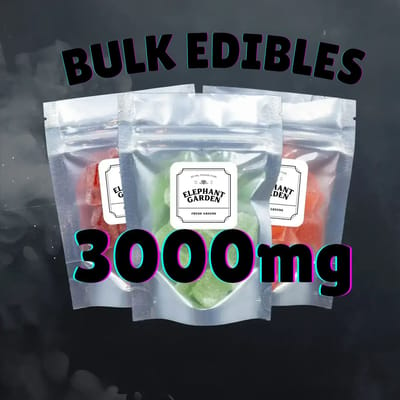
Edibles — Bulk Edibles made in-house for 8+ years (gluten-free, nut-free), Drip Edibles candy infused with D9 THC, plus mix-and-match bundles taking advantage of the new 100mg multi-pack format
Bundles — value packs across flower, concentrate, and edibles
We deliver across Canada from our cannabis delivery hub, with same-day options in Greater Vancouver and fast-shipping coverage in every other province. If you want more context on the broader Canadian market shifts in 2026, our pieces on the 2026 Regulatory Reset and the BC craft solventless scene are good companion reads.
The 9.9% number is not just a market-watcher’s curiosity. It is a sign that one Canadian province has figured out how to make a legal cannabis market work for craft growers, premium buyers, and everyone in between. Worth paying attention to.
The 9.9% Outlier: Why BC Cannabis Is Growing While the Rest of Canada Shrinks (2026)
TL;DR: In April 2026, British Columbia’s legal cannabis market grew 9.9% year over year while Alberta shrank 2.1% and the broader Canadian retail market continued its multi-quarter decline. BC is now nearly tied with Alberta for the #2 provincial market behind Ontario, and the reasons are unique to this province: 123 active micro-cultivator licences, a Direct Delivery program that lets craft growers ship straight to retailers, the most stable average item price in the country ($22.87 in April 2026), an edibles category up 34.6% year over year, and international demand for BC craft genetics from Germany, the UK, and Australia. This is a story about a regional cannabis market that is doing almost the exact opposite of what every other province in Canada is doing right now.
Walk into any cannabis policy conversation in Canada in 2026 and the mood is grim. Producers are filing for creditor protection. Ontario retailers are racing each other to the bottom on price. Headlines about consolidation, excise debt, and store closures have become a kind of background music for the industry. And then there is British Columbia, quietly putting up a 9.9% year-over-year sales increase in April 2026 while the rest of the country is shrinking.
That gap — between BC and everywhere else — is the most interesting number in Canadian cannabis right now. It is not a rounding error. It is not a one-month blip. It is the result of a specific set of decisions that BC has made about how cannabis gets grown, shipped, and sold, and it is starting to show up in the data in ways that are hard to ignore.
This is what is actually driving it.
The Numbers: BC vs Everyone Else (April 2026)
According to Headset’s April 2026 BC market report, British Columbia posted 9.9% YoY growth in retail cannabis sales. That alone would be a remarkable figure. In context, it becomes something more like an outlier event.
For most of legalization’s first seven years, Ontario and Alberta have been the two market leaders by retail volume, with BC sitting in a respectable but distant third place. As of spring 2026, BC has closed almost the entire gap with Alberta and is approaching parity for the #2 spot.
That is not happening because Albertans are suddenly buying less weed. It is happening because BC has built a different kind of market — one that, for once, actually looks like the place it comes from.
Driver #1: 123 Micro-Cultivator Licences and a Real Craft Scene
Health Canada introduced micro-cultivator licences in 2018 as a way to let smaller, more agile growers participate in the legal market. The intent was to preserve some version of the legacy cannabis culture that had defined places like the Kootenays and Vancouver Island for decades. Most provinces did not take particular advantage of the licence class. British Columbia did.
As of 2026, BC hosts roughly 123 active micro-cultivator licences — by far the largest cluster in the country. Combined with 200+ standard licensed producers, that gives the province a unique two-tier production landscape: industrial-scale flower for value SKUs, and hand-tended craft flower for the premium end.
What that means for shoppers is that BC menus carry strains, growers, and cultivation styles that simply do not exist on Ontario or Alberta shelves at the same depth. Living-soil organic grows, hand-trimmed batches, small-batch hash and rosin, single-cultivar drops — these are not marketing terms in BC. They are grading-system features that map onto real cultivators in places like the Sunshine Coast, the Kootenays, Galiano Island, and Vancouver Island.
The cultural piece matters too. BC has had a continuous, recognisable cannabis identity since the 1970s. When legalization arrived, that identity did not have to be invented from scratch. It just had to be licensed.
MKU AAAA
MKU AAAA delivers a fast-acting cerebral lift that melts into deep body calm, courtesy of...
Supreme Death Bubba AAAA
Supreme Death Bubba AAAA is BC indica royalty — Supreme Diesel x Death Bubba with...
Driver #2: The Direct Delivery Program
The single most underappreciated piece of the BC story is a logistics program called Direct Delivery. Under it, smaller licensed producers and micro-cultivators can ship their products directly to BC retailers, bypassing the central provincial warehouse that has historically been a bottleneck for craft brands. The program is administered by the BC Ministry of Public Safety and Solicitor General’s Cannabis Secretariat.
Why does this matter for the data? Because for years, the way Canadian provincial cannabis distribution worked actively penalised small producers. Every pound a craft grower wanted to sell had to go to a provincial warehouse, get logged, get stored, get re-shipped — adding weeks to the journey and fees at every step. For a category like fresh-frozen hash rosin or a small-batch craft drop where freshness is the entire value proposition, that pipeline was lethal.
Direct Delivery shortened it. A grower on Vancouver Island can now press hash rosin on a Monday and have it on a Vancouver retailer’s shelf within days, not months. As StratCann has reported, fees in the program are still higher than craft producers would like, but the operational difference is real. Products taste better when they get to shelves faster, and BC consumers have noticed.
No other province has anything quite like it operating at this scale.
Driver #3: A Stable Price Floor of $22.87
The average price per item in BC in April 2026 was $22.87, down only twelve cents month over month. That stability is, in its own quiet way, one of the most important numbers in the entire report.
Across most of Canada, average cannabis prices have been in steady decline since legalization — the result of oversupply, retail oversaturation, and a desperate race-to-the-bottom on shelf pricing. Producers receive as little as $3 per gram wholesale in some categories, and a sizeable portion of retail margin gets eaten by excise tax before anyone makes a dollar.
BC is the exception. The provincial market has settled into a price band that supports craft producers, micro-cultivators, and specialty SKUs without collapsing them into a single $4-a-gram bargain bin. The reason is partly cultural — BC consumers are willing to pay more for known craft brands — and partly structural, in that the province’s distribution model has not pushed quite as hard on margin compression as Ontario’s has.
Stable prices are a signal that supply and demand are roughly in balance. In a country where most cannabis markets are wildly out of balance one way or the other, that signal is rare.
Driver #4: Edibles +34.6% YoY (and Gummies +38.7%)
The edibles category in BC grew 34.6% year over year in April 2026. Inside that number is something even more interesting: BC gummy dollar sales grew 38.7% while gummy unit sales fell 19.3%. That means consumers are buying fewer gummy packages — but paying more per package.
This is a classic premium up-trade. Two forces are driving it:
This is why edibles is the fastest-growing category in BC right now. The audience is broader than the legacy cannabis demographic ever was, and the regulatory ceiling that was holding the category back finally cracked open.
1500mg THC Bulk Edibles 50 Pack (30mg dose)
Introducing our 50 pack of 30mg THC Infused Edibles — a premium collection of precisely...
+3000mg THC Bulk Edibles 30 Pack (100mg dose)
Introducing our 30 pack of 100mg THC Infused Edibles — a premium collection of high-potency...
+Driver #5: International Demand for BC Craft
BC craft cannabis has become one of Canada’s quiet export wins. According to recent StratCann reporting, BC-grown craft flower is now in active demand from medical and legal-recreational markets in Germany, the United Kingdom, and Australia. Several BC micros have signed direct supply agreements with European pharmacies and Australian distributors.
The export angle does two things at once. First, it adds a revenue stream that does not depend on the domestic retail environment. Second — and more relevant for BC shoppers — it creates a competitive dynamic in which BC producers can no longer be commoditised by any single buyer. When a craft farmer in the Kootenays has buyers in Hamburg as well as Vancouver, the price floor in the domestic market gets pulled up by global demand.
The reputation piece compounds, too. International buyers do not generally chase Ontario greenhouse flower. They chase what they consider the genetic and cultivation pedigree of BC craft, and that perception flows back into the domestic market in the form of higher-perceived-quality SKUs.
Driver #6: The BC Consumer Demographic
BC’s cannabis buyer base looks different from the rest of the country. A few features stand out from the available data:
That demographic mix supports the kind of market BC is building. Wellness-curious shoppers buy higher-margin edibles and tinctures. Older premium buyers buy AAAA flower and live hash rosin rather than $4/g greenhouse smalls. Female gummy buyers drive repeat purchases. None of these segments are racing to the bottom on price.
The Contrast: What Ontario and Alberta Are Doing Differently
For BC’s growth to mean anything, it helps to see what the other two big markets are actually doing.
Ontario is the largest market in Canada by retail volume but is choking on store oversaturation. Toronto alone has well over 600 licensed retail locations, many within walking distance of each other. The result is brutal margin compression, frequent store closures, and a race-to-the-bottom on flower prices that has made it nearly impossible for craft brands to maintain shelf presence at sustainable price points. Ontario’s distribution monopoly (OCS) also limits how much variety any single retailer can carry from smaller producers.
Alberta took the opposite approach with a private retail model and has the highest per-capita retail density in Canada. After years of rapid expansion, the Alberta market has hit its saturation point. A senior Alberta cannabis executive recently forecast that about a third of Alberta cannabis stores could close in the next 12-24 months as the market right-sizes. Alberta’s April 2026 sales were down 2.1% YoY.
BC sits in between these two extremes. The province has fewer stores per capita than Alberta but a much deeper craft producer base than Ontario. It has more direct-to-retailer pathways than either province. And its consumer base is sophisticated enough to support a premium tier rather than collapsing the whole market into bargain-bin flower.
What This Means If You Live in BC (2026)
For most BC consumers, the 9.9% headline number translates into a handful of concrete things you can see when you shop:
The wider context is that British Columbia is the only major Canadian cannabis market right now with enough structural fundamentals — supply diversity, distribution flexibility, demographic depth — to grow rather than contract. If you live in BC and shop in BC, that affects what is on the menu when you open a cannabis website or walk into a store.
The Sober Caveats
To be fair to the data, a few things deserve flagging. The 9.9% growth figure reflects a single month (April 2026) compared to April 2025. The underlying Headset methodology covers licensed retail sales and does not capture illicit-market activity, so the true BC consumption picture is broader than the legal-market number suggests. Nationally, the legal market continues to compete with a stubborn illicit segment, and BC is not immune to that.
Excise tax pressure remains a real problem for BC producers, even craft ones. Multiple BC and Canadian LPs have filed for creditor protection in 2026 citing excise debt, and the federal Standing Committee on Finance is currently reviewing a proposed shift to a 10% ad valorem cap. None of that is fixed yet.
And the BC market is not invincible. If the Direct Delivery fee structure tightens, or if international export demand softens, or if Health Canada’s micro-cultivator framework changes, the foundation of the 9.9% number could shift quickly. For now, though, the trend is real and the drivers are structural.
Frequently Asked Questions
Why is BC’s cannabis market growing while Alberta and Ontario are shrinking?
BC has structural advantages that the other two markets lack: 123 micro-cultivator licences supporting a real craft scene, the Direct Delivery program that lets growers ship straight to retailers, stable average prices around $22.87 per item, and a demographic mix weighted toward premium and wellness-positioned consumption. Ontario is suffering from retail oversaturation and margin compression; Alberta is past its peak retail density and consolidating.
What is BC’s Direct Delivery program?
Direct Delivery is a BC government program that allows licensed cannabis producers — particularly smaller LPs and micro-cultivators — to ship products straight to BC retailers without going through the central provincial warehouse. It shortens the supply chain by weeks, which matters enormously for fresh products like hash rosin and small-batch flower. No other Canadian province has an equivalent program operating at the same scale.
How much of Canada’s legal cannabis is produced in BC?
British Columbia produces roughly 25% of Canada’s legal cannabis. The province hosts more than 200 standard licensed producers and approximately 123 active micro-cultivator licences as of 2026 — the largest concentration of craft producers in the country.
Is BC craft cannabis exported internationally?
Yes. Several BC micro-cultivators have signed direct supply agreements with medical and legal-recreational distributors in Germany, the United Kingdom, and Australia. International demand for BC genetics and craft cultivation has become a meaningful secondary market that helps support domestic price stability.
What is the average price of cannabis in BC right now?
The average item price across BC’s legal cannabis retail market in April 2026 was $22.87, down only twelve cents from March. That is the most stable cannabis pricing in Canada and a strong signal that supply and demand in the province are roughly in balance.
Why are BC edibles sales up 34.6% year over year?
Two factors. First, Health Canada’s March 2026 amendment removed the 10mg-THC-per-package cap for multi-pack edibles (individual pieces are still 10mg max), which allowed 100mg+ packages to hit shelves. Second, the demographic buying edibles has expanded — women now drive 57% of gummy purchases nationally, and BC’s wellness-positioned buyer base has been an early adopter of the new format.
Does the 9.9% growth mean BC will overtake Alberta as Canada’s #2 market?
Not yet, but the gap has narrowed significantly. As of April 2026, BC is nearly tied with Alberta for the #2 provincial position behind Ontario. If BC’s growth rate holds and Alberta continues to consolidate, BC could pass Alberta within the next 12-18 months.
Shop BC Craft (and Get It Delivered)
Elephant Garden is a BC-based cannabis retailer that ships nationwide, and we work directly with BC craft growers, micro-cultivators, and concentrate producers wherever we can. If you want to see what the 9.9% growth story looks like on a menu, here is where to start:
We deliver across Canada from our cannabis delivery hub, with same-day options in Greater Vancouver and fast-shipping coverage in every other province. If you want more context on the broader Canadian market shifts in 2026, our pieces on the 2026 Regulatory Reset and the BC craft solventless scene are good companion reads.
The 9.9% number is not just a market-watcher’s curiosity. It is a sign that one Canadian province has figured out how to make a legal cannabis market work for craft growers, premium buyers, and everyone in between. Worth paying attention to.