Health Canada quietly reshaped Canada’s cannabis market in 2025. The federal regulator pushed through four major amendments to the Cannabis Regulations that, taken together, are the most significant rewrite of what you can buy at a Canadian dispensary since legalization in 2018. Full compliance lands on March 12, 2026, which is when most of the visible changes will hit shelves in British Columbia.
This is a citizen reference guide to what changed, what didn’t change, and what shoppers should expect to see when they browse cannabis products this year. We’re keeping it plain-English, source-linked, and free of hype. If a rule is still being debated rather than enacted, we say so.
TL;DR: The Four Big 2025-2026 Cannabis Rule Changes
The 1-gram pre-roll cap is gone. Pre-rolls can now be made up to the 30g possession limit, opening the door to 2g, 3g, and 5g joints, larger infused pre-rolls, and bigger hash-hole formats.
Edible multi-packs are now legal. A single outer package can hold multiple 10mg pieces totalling more than 10mg of THC. The per-piece cap is still 10mg — that part did not change.
Transparent packaging windows are allowed. Producers can put clear or frosted windows on bags of dried flower, fresh cannabis, and seeds, so you can finally see the bud before you buy. QR codes and peel-back labels are also now permitted.
Limited ethyl alcohol is allowed in inhalation extracts and denatured alcohol in topicals. A small but meaningful unlock for vape, rosin, and topical formulations that were previously restricted.
Compliance deadline for all four: March 12, 2026. Below is the longer explanation of each, with the relevant Canada Gazette and Health Canada citations.
Why Health Canada Streamlined Cannabis Regulations in 2025-2026
The amendments — registered as SOR/2025-43 in the Canada Gazette on March 12, 2025 — are formally titled the Regulations Amending Certain Regulations Concerning Cannabis (Streamlining of Requirements). Health Canada’s stated purpose is straightforward: reduce regulatory burden on licensed producers, support diversity and competition in the legal market, and maintain the public health and safety guardrails of the original Cannabis Act.
The political context matters. Canada’s legal cannabis industry has been in financial distress for years. By early 2026, several large licensed producers — including Cannabist Co., CanadaBis, and Simply Solventless — had filed under the Companies’ Creditors Arrangement Act, citing the federal excise framework as a primary driver. Licensed producers carry hundreds of millions in deferred excise debt, and the per-gram excise duty floor of $1 is widely regarded as economically unsustainable for value-priced flower. Industry associations like the Cannabis Council of Canada have been lobbying hard for relief.
Health Canada cannot fix the excise problem on its own — that requires Finance Canada and Parliament. But the regulator can unburden producers in other ways, and that is what these amendments do. Most of the changes are administrative or formatting, but a handful materially affect product design and what BC shoppers will see in 2026.
Change #1 — The 1-Gram Pre-Roll Cap Is Gone
What Changed
Before March 2025, every individual pre-roll sold at retail in Canada had to be 1 gram or less. The package itself could contain up to 30 grams (the federal possession limit), but each joint inside had to be capped at 1g. That rule is gone.
Under the amended regulations, an individual pre-roll can now be any weight up to the 30g possession ceiling. A producer can legally sell a single 30-gram blunt if they want to. They probably won’t — but 2g, 3g, and 5g formats are absolutely on the way.
When It Takes Effect
The amendments were registered on March 12, 2025, and licence holders have a 12-month transition period to bring labels and packaging into full compliance by March 12, 2026. Some larger-format pre-rolls have already started appearing on Canadian shelves in late 2025 and early 2026 under the new rules.
What You’ll See on BC Shelves
The pre-roll category has been the fastest-growing segment of the Canadian cannabis market for two years running, and the cap removal will accelerate that. Expect to see:
Heavier single-format joints in 1.5g, 2g, and 3g sizes — including infused versions where the joint is coated in kief, hash, or rosin
Bigger hash holes — pre-rolls with a strip or core of solventless hash running through the middle of the joint, now available in larger formats
Larger blunts and cones — multi-gram tobacco-leaf-style wraps that legal producers couldn’t previously match in the regulated market
Re-formatted multi-packs — the same total weight, sometimes in fewer but larger joints
If you’ve been buying pre-rolled joints at our pre-roll category, you’ll notice the catalogue shifting throughout 2026 as licensed producers replace older 1g formats with bigger formats. For a deeper dive on how this rule change is reshaping the market, see our companion piece on infused pre-rolls dethroning whole flower.
Change #2 — Multi-Pack Edibles Are Now Legal (But With a Catch)
What Actually Changed
This one has been widely misreported, so we want to be precise.
Before the amendments, Canadian cannabis regulations capped both the immediate container (the inner package holding the actual edible) and the outermost container (the box or bag you see in the store) at 10mg of THC total. That meant a Canadian licensed producer could sell you one tiny gummy in a giant box — and that was it. Multi-packs of 10mg gummies, the format dominant in nearly every other legal cannabis jurisdiction, were illegal.
The 2025 amendments removed the 10mg cap on the outermost container. A package can now hold multiple 10mg pieces — five 10mg gummies in a single bag, ten 10mg chocolates in one box, and so on. Each piece is still individually wrapped (the immediate container rule still applies), and child-resistant packaging is still mandatory.
The 10mg-Per-Piece Cap That Did NOT Change
This is the part everyone gets wrong. Health Canada did not raise the per-piece THC cap. Every individual edible sold by a federally licensed producer is still legally limited to 10mg of THC.
If you’ve seen ads for “100mg edibles now legal in Canada” — that is misleading shorthand for “a single legal package can now contain 100mg total, split across ten individually wrapped 10mg pieces.” It is not “one 100mg gummy is now legal.” For a deeper breakdown of how multi-pack edibles work in practice, see our edibles dosing guide.
Why the Industry Is Still Lobbying
The Canadian unregulated market routinely sells 100mg, 200mg, and 500mg single-piece edibles. Legal producers have argued for years that the 10mg-per-piece cap pushes regular consumers into the unregulated market, where products aren’t dose-tested and packaging isn’t child-resistant. The Cannabis Council of Canada’s edibles caucus and the federal Competition Bureau have both publicly recommended raising the per-piece limit. As of May 2026, Health Canada has not signalled any movement on that, but it is the next pressure point.
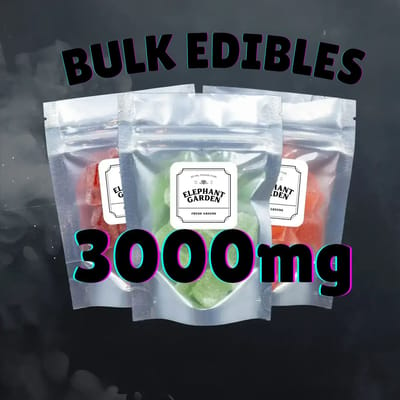
For now, the practical effect of the multi-pack rule for shoppers in BC is simple: edibles are about to get cheaper per milligram. Less packaging per dose means lower production costs, which means lower retail prices. Elephant Garden’s in-house bulk edibles have offered high-mg-per-package value for years, and the new rules legalize that format more broadly across the legal industry.
Change #3 — Transparent Packaging Means You Can Finally See the Bud
What’s Now Allowed
One of the longest-running complaints from Canadian cannabis consumers has been the “shake bag” problem. Until 2025, federal packaging rules required opaque containers for dried flower. You couldn’t see what you were buying until you got it home and opened the bag — and if the buds inside looked light, leafy, or broken up, you had no recourse.
The amended regulations permit clear or frosted windows on packaging for:
Dried cannabis (flower and pre-rolls)
Fresh cannabis
Cannabis seeds
Producers can now use differently coloured caps and containers, add QR codes that link to certificates of analysis, terpene profiles, or batch information, and use peel-back or accordion labels that fit more content on smaller packages. Several Canadian producers have already shipped transparent-window product in early 2026.
What’s Still Restricted
Edibles, cannabis extracts for ingestion, and topicals still cannot use transparent packaging. Health Canada’s rationale is that products that look like ordinary candy, gum, or cosmetics need to remain visually distinguishable from non-cannabis equivalents to reduce accidental ingestion risk, especially for children. The strict child-resistant, plain-packaging rules for edibles remain firmly in place.
Advertising restrictions also remain unchanged. Producers still cannot promote cannabis products on social media in any way that could appeal to minors, depict consumption, associate the product with a way of life, or use testimonials. That’s why your favourite BC craft producer can’t run an Instagram campaign even though their packaging may now have a clear window.
Change #4 — Ethyl Alcohol Allowances Unlock New Product Formats
For Vapes and Concentrates
The 2025 amendments permit a limited amount of ethyl alcohol in cannabis extracts intended for inhalation — meaning vapes, certain concentrates, and the alcohol-extraction stage of some rosin and resin production. Before the change, producers had to use alternative solvents or processes that were sometimes less efficient or produced less stable formulations.
For shoppers, this matters in two ways:
More consistent vape cartridges. Producers can use ethyl alcohol as a viscosity modifier where appropriate, which can reduce wick clogging and improve hit consistency in 510-thread cartridges
Better extract stability. Certain solventless and live-resin formats benefit from controlled trace ethanol, particularly during winterization. Expect to see more shelf-stable craft concentrates from BC producers
Denatured ethyl alcohol is now allowed as an ingredient in cannabis topical products. This is the same denatured alcohol used in skincare, perfumery, and pharmaceutical creams, and it functions as a solvent, preservative, and skin-penetration enhancer. Previous regulations were ambiguous about its use, and most Canadian topical brands avoided it entirely.
The result, for BC shoppers, will be a wider range of cannabis-infused balms, lotions, and serums with formulations closer to what’s available in the U.S. legal market. It’s a small change but a meaningful one for the cannabis topicals category, which has lagged behind flower, edibles, and concentrates since legalization.
An honest reference guide has to flag what didn’t change. Two big ones:
The Per-Edible-Piece 10mg THC Cap
Still in place. As discussed under Change #2 above, the legal industry, the Cannabis Council of Canada, and the federal Competition Bureau have all called for raising this limit. A parliamentary e-petition to raise the per-piece cap to 100mg gathered tens of thousands of signatures in 2025. Health Canada has not committed to a timeline. Until that changes, the legal Canadian edible market will remain structurally constrained.
Cannabis Advertising Restrictions
Sections 17 to 28 of the Cannabis Act still impose some of the strictest cannabis advertising rules in any legal jurisdiction on Earth. Producers and retailers cannot run social media ads that depict consumption, use testimonials or endorsements, associate cannabis with a way of life or activity, or be visible to anyone who hasn’t age-verified. Even mentioning a specific cultivar by name in a promotional context can run afoul of the rules, depending on the venue.
This is why even excellent BC craft producers struggle to build consumer brand recognition the way wineries or breweries do. Industry submissions to Health Canada’s regulatory review have requested loosening of these provisions for age-gated environments. As of May 2026, no movement.
The Bigger Picture — Why These Changes Happened Now
The four amendments above are part of a broader 2026 regulatory environment that explains the timing:
Excise tax reform is the next major fight. The federal Standing Committee on Finance has heard testimony backing a 10% ad valorem excise cap to replace the current $1-per-gram floor, which is widely regarded as the leading cause of LP insolvency. The Cannabis Council of Canada has filed formal recommendations. No legislative change has happened yet, but pressure is building.
Health Canada cannabis funding is ending. The federal government’s dedicated cannabis-program funding stream is being wound down, with an $87.8 million spending reduction in 2026-27 and 942 full-time-equivalent positions cut by 2028-29. Less Health Canada capacity could mean slower licensing for new entrants — and lighter day-to-day compliance enforcement on existing licence holders.
Multiple LPs have entered creditor protection. Cannabist Co., CanadaBis, and Simply Solventless all filed under the Companies’ Creditors Arrangement Act in late 2025 and early 2026. Most insolvency filings explicitly cite federal excise debt as the proximate cause.
In other words: Health Canada is unburdening a stressed industry on the regulatory side while waiting for Finance Canada to (potentially) address the excise side. The 2025-2026 amendments are not a vibes-based liberalization — they’re a calibrated response to a sector that is bleeding money.
Continued evaluation of the Cannabis Act following the 2024 Expert Panel review
Potential adjustments to the cannabis cost-recovery framework (the annual fees licensed producers pay Health Canada)
Ongoing work on the regulation of cannabis health products and cosmetic CBD applications — a separate file that has been moving slowly for years
What’s not on the formal 2025-2027 plan: raising the per-piece edible cap, loosening advertising restrictions, or making structural changes to the licensing fee model. Each of those remains an industry ask without a regulatory commitment.
Consumer-side surveillance continues through the Canadian Cannabis Survey, which Health Canada uses to track public consumption patterns and inform future amendments. The 2024 edition reported that 27% of Canadians aged 16+ had used cannabis in the past 12 months — a participation rate that suggests further regulatory normalization will continue to be the long-run direction of policy.
Frequently Asked Questions
What are the new Canadian cannabis regulations in 2026?
Health Canada finalized four major cannabis regulation changes in 2025 with a compliance deadline of March 12, 2026: the 1-gram pre-roll cap was removed, the 10mg outer-container cap on edibles was lifted to allow multi-packs, transparent packaging windows were permitted on dried flower, and limited ethyl alcohol was permitted in inhalation extracts and topicals. The per-edible 10mg THC cap and the advertising restrictions did not change.
Are 100mg edibles legal in Canada now?
Not as a single piece. The 10mg-per-piece THC cap is still in place at federally licensed producers. A package can now legally contain ten individually wrapped 10mg pieces totalling 100mg, but a single 100mg gummy from a legal producer is not permitted as of May 2026. Industry groups and the federal Competition Bureau are lobbying for that next change.
How big can a pre-roll be in Canada now?
Up to the 30-gram possession limit. The 1g cap on individual pre-rolls was removed by SOR/2025-43, so producers can now legally sell 2g, 3g, 5g, or even single-format 30g pre-rolls. In practice, the most common new sizes hitting shelves are 1.5g, 2g, and 3g infused pre-rolls.
When do the new cannabis rules take effect in Canada?
The amendments were registered on March 12, 2025, and licence holders have until March 12, 2026 to bring all packaging and labelling into full compliance. Some compliant product has been on shelves since mid-2025; the full transition will be visible across most retail catalogues by spring 2026.
Can I see the cannabis flower through the packaging before I buy?
Yes — for dried flower, fresh cannabis, and seeds, but not for edibles, ingestible extracts, or topicals. The 2025 amendments allow producers to use clear or frosted windows on dried-flower packaging. Whether any specific product uses one depends on the producer’s design choice, but expect to see more transparent packaging across BC retail in 2026.
Did Health Canada loosen cannabis advertising rules?
No. Sections 17–28 of the Cannabis Act, which govern advertising and promotion, were not amended. The same restrictions on social media advertising, testimonials, lifestyle association, and visibility to non-age-verified audiences remain in place. The 2025-2026 amendments addressed product design, packaging, and ingredient rules — not promotion.
Why did Health Canada make these changes?
The amendments are formally framed as reducing regulatory burden, supporting market diversity, and protecting public health and safety. The political context is that Canada’s legal cannabis industry has been in financial distress, with several large licensed producers filing for creditor protection in 2025-2026, and Health Canada’s amendments are designed to ease compliance costs while the larger fight over federal excise tax reform plays out separately.
For shoppers, the visible effects of the 2025-2026 cannabis amendments are going to roll out gradually across 2026 — larger pre-rolls, multi-pack edibles, transparent packaging on premium flower, and a slightly broader range of vape and topical formulations. Elephant Garden’s catalogue already reflects several of these shifts, particularly in pre-rolls, edibles, and concentrates.
If you’re new to ordering online, our cannabis delivery hub covers everything from shipping windows to payment methods, and our Vancouver 2026 delivery guide goes deeper on local options. Bookmark this page if you want a clean reference for what changed and when — we’ll update it as Health Canada works through the next round of amendments.
The 2026 Regulatory Reset: Every New Cannabis Rule BC Shoppers Need to Know
Health Canada quietly reshaped Canada’s cannabis market in 2025. The federal regulator pushed through four major amendments to the Cannabis Regulations that, taken together, are the most significant rewrite of what you can buy at a Canadian dispensary since legalization in 2018. Full compliance lands on March 12, 2026, which is when most of the visible changes will hit shelves in British Columbia.
This is a citizen reference guide to what changed, what didn’t change, and what shoppers should expect to see when they browse cannabis products this year. We’re keeping it plain-English, source-linked, and free of hype. If a rule is still being debated rather than enacted, we say so.
TL;DR: The Four Big 2025-2026 Cannabis Rule Changes
Compliance deadline for all four: March 12, 2026. Below is the longer explanation of each, with the relevant Canada Gazette and Health Canada citations.
Why Health Canada Streamlined Cannabis Regulations in 2025-2026
The amendments — registered as SOR/2025-43 in the Canada Gazette on March 12, 2025 — are formally titled the Regulations Amending Certain Regulations Concerning Cannabis (Streamlining of Requirements). Health Canada’s stated purpose is straightforward: reduce regulatory burden on licensed producers, support diversity and competition in the legal market, and maintain the public health and safety guardrails of the original Cannabis Act.
The political context matters. Canada’s legal cannabis industry has been in financial distress for years. By early 2026, several large licensed producers — including Cannabist Co., CanadaBis, and Simply Solventless — had filed under the Companies’ Creditors Arrangement Act, citing the federal excise framework as a primary driver. Licensed producers carry hundreds of millions in deferred excise debt, and the per-gram excise duty floor of $1 is widely regarded as economically unsustainable for value-priced flower. Industry associations like the Cannabis Council of Canada have been lobbying hard for relief.
Health Canada cannot fix the excise problem on its own — that requires Finance Canada and Parliament. But the regulator can unburden producers in other ways, and that is what these amendments do. Most of the changes are administrative or formatting, but a handful materially affect product design and what BC shoppers will see in 2026.
Change #1 — The 1-Gram Pre-Roll Cap Is Gone
What Changed
Before March 2025, every individual pre-roll sold at retail in Canada had to be 1 gram or less. The package itself could contain up to 30 grams (the federal possession limit), but each joint inside had to be capped at 1g. That rule is gone.
Under the amended regulations, an individual pre-roll can now be any weight up to the 30g possession ceiling. A producer can legally sell a single 30-gram blunt if they want to. They probably won’t — but 2g, 3g, and 5g formats are absolutely on the way.
When It Takes Effect
The amendments were registered on March 12, 2025, and licence holders have a 12-month transition period to bring labels and packaging into full compliance by March 12, 2026. Some larger-format pre-rolls have already started appearing on Canadian shelves in late 2025 and early 2026 under the new rules.
What You’ll See on BC Shelves
The pre-roll category has been the fastest-growing segment of the Canadian cannabis market for two years running, and the cap removal will accelerate that. Expect to see:
If you’ve been buying pre-rolled joints at our pre-roll category, you’ll notice the catalogue shifting throughout 2026 as licensed producers replace older 1g formats with bigger formats. For a deeper dive on how this rule change is reshaping the market, see our companion piece on infused pre-rolls dethroning whole flower.
1.5g Kief-Dipped Pre-Rolls (2-Pack)
2-pack of 0.75g joints dipped in flavoured terp sauce and coated in premium kief for...
+1.5g Premium Pre-Rolled Joints (2-pack)
1.5g Premium Pre-Rolled Joints deliver the ultimate grab-and-go cannabis experience. Each joint is expertly crafted...
Change #2 — Multi-Pack Edibles Are Now Legal (But With a Catch)
What Actually Changed
This one has been widely misreported, so we want to be precise.
Before the amendments, Canadian cannabis regulations capped both the immediate container (the inner package holding the actual edible) and the outermost container (the box or bag you see in the store) at 10mg of THC total. That meant a Canadian licensed producer could sell you one tiny gummy in a giant box — and that was it. Multi-packs of 10mg gummies, the format dominant in nearly every other legal cannabis jurisdiction, were illegal.
The 2025 amendments removed the 10mg cap on the outermost container. A package can now hold multiple 10mg pieces — five 10mg gummies in a single bag, ten 10mg chocolates in one box, and so on. Each piece is still individually wrapped (the immediate container rule still applies), and child-resistant packaging is still mandatory.
The 10mg-Per-Piece Cap That Did NOT Change
This is the part everyone gets wrong. Health Canada did not raise the per-piece THC cap. Every individual edible sold by a federally licensed producer is still legally limited to 10mg of THC.
If you’ve seen ads for “100mg edibles now legal in Canada” — that is misleading shorthand for “a single legal package can now contain 100mg total, split across ten individually wrapped 10mg pieces.” It is not “one 100mg gummy is now legal.” For a deeper breakdown of how multi-pack edibles work in practice, see our edibles dosing guide.
Why the Industry Is Still Lobbying
The Canadian unregulated market routinely sells 100mg, 200mg, and 500mg single-piece edibles. Legal producers have argued for years that the 10mg-per-piece cap pushes regular consumers into the unregulated market, where products aren’t dose-tested and packaging isn’t child-resistant. The Cannabis Council of Canada’s edibles caucus and the federal Competition Bureau have both publicly recommended raising the per-piece limit. As of May 2026, Health Canada has not signalled any movement on that, but it is the next pressure point.
For now, the practical effect of the multi-pack rule for shoppers in BC is simple: edibles are about to get cheaper per milligram. Less packaging per dose means lower production costs, which means lower retail prices. Elephant Garden’s in-house bulk edibles have offered high-mg-per-package value for years, and the new rules legalize that format more broadly across the legal industry.
1500mg THC Bulk Edibles 50 Pack (30mg dose)
Introducing our 50 pack of 30mg THC Infused Edibles — a premium collection of precisely...
+D9 THC Drip Edibles (750mg & 1500mg)
Drip into flavour paradise with pure Delta-9 THC! Real candy-store candies infused with D9 THC...
+Change #3 — Transparent Packaging Means You Can Finally See the Bud
What’s Now Allowed
One of the longest-running complaints from Canadian cannabis consumers has been the “shake bag” problem. Until 2025, federal packaging rules required opaque containers for dried flower. You couldn’t see what you were buying until you got it home and opened the bag — and if the buds inside looked light, leafy, or broken up, you had no recourse.
The amended regulations permit clear or frosted windows on packaging for:
Producers can now use differently coloured caps and containers, add QR codes that link to certificates of analysis, terpene profiles, or batch information, and use peel-back or accordion labels that fit more content on smaller packages. Several Canadian producers have already shipped transparent-window product in early 2026.
What’s Still Restricted
Edibles, cannabis extracts for ingestion, and topicals still cannot use transparent packaging. Health Canada’s rationale is that products that look like ordinary candy, gum, or cosmetics need to remain visually distinguishable from non-cannabis equivalents to reduce accidental ingestion risk, especially for children. The strict child-resistant, plain-packaging rules for edibles remain firmly in place.
Advertising restrictions also remain unchanged. Producers still cannot promote cannabis products on social media in any way that could appeal to minors, depict consumption, associate the product with a way of life, or use testimonials. That’s why your favourite BC craft producer can’t run an Instagram campaign even though their packaging may now have a clear window.
Change #4 — Ethyl Alcohol Allowances Unlock New Product Formats
For Vapes and Concentrates
The 2025 amendments permit a limited amount of ethyl alcohol in cannabis extracts intended for inhalation — meaning vapes, certain concentrates, and the alcohol-extraction stage of some rosin and resin production. Before the change, producers had to use alternative solvents or processes that were sometimes less efficient or produced less stable formulations.
For shoppers, this matters in two ways:
For a deeper dive on how concentrate production methods affect what’s in your jar, see our 2026 rosin guide and the complete concentrates buying guide.
For Topicals
Denatured ethyl alcohol is now allowed as an ingredient in cannabis topical products. This is the same denatured alcohol used in skincare, perfumery, and pharmaceutical creams, and it functions as a solvent, preservative, and skin-penetration enhancer. Previous regulations were ambiguous about its use, and most Canadian topical brands avoided it entirely.
The result, for BC shoppers, will be a wider range of cannabis-infused balms, lotions, and serums with formulations closer to what’s available in the U.S. legal market. It’s a small change but a meaningful one for the cannabis topicals category, which has lagged behind flower, edibles, and concentrates since legalization.
Liquid Diamonds Vape Cartridge - 1g
Liquid Diamonds Vape Cartridge takes potency to the next level. Each 1g cartridge is filled...
+THC Distillate Vape Cartridge
$20.00Original price was: $20.00.$16.00Current price is: $16.00.Premium THC Distillate Vape Cartridge – Experience pure, potent vapour with Elephant Garden's expertly crafted...
+What Did NOT Change (and Probably Should Have)
An honest reference guide has to flag what didn’t change. Two big ones:
The Per-Edible-Piece 10mg THC Cap
Still in place. As discussed under Change #2 above, the legal industry, the Cannabis Council of Canada, and the federal Competition Bureau have all called for raising this limit. A parliamentary e-petition to raise the per-piece cap to 100mg gathered tens of thousands of signatures in 2025. Health Canada has not committed to a timeline. Until that changes, the legal Canadian edible market will remain structurally constrained.
Cannabis Advertising Restrictions
Sections 17 to 28 of the Cannabis Act still impose some of the strictest cannabis advertising rules in any legal jurisdiction on Earth. Producers and retailers cannot run social media ads that depict consumption, use testimonials or endorsements, associate cannabis with a way of life or activity, or be visible to anyone who hasn’t age-verified. Even mentioning a specific cultivar by name in a promotional context can run afoul of the rules, depending on the venue.
This is why even excellent BC craft producers struggle to build consumer brand recognition the way wineries or breweries do. Industry submissions to Health Canada’s regulatory review have requested loosening of these provisions for age-gated environments. As of May 2026, no movement.
The Bigger Picture — Why These Changes Happened Now
The four amendments above are part of a broader 2026 regulatory environment that explains the timing:
In other words: Health Canada is unburdening a stressed industry on the regulatory side while waiting for Finance Canada to (potentially) address the excise side. The 2025-2026 amendments are not a vibes-based liberalization — they’re a calibrated response to a sector that is bleeding money.
What’s Next on Health Canada’s Plate
According to Health Canada’s 2025–2027 Forward Regulatory Plan, the following cannabis-related items are queued:
What’s not on the formal 2025-2027 plan: raising the per-piece edible cap, loosening advertising restrictions, or making structural changes to the licensing fee model. Each of those remains an industry ask without a regulatory commitment.
Consumer-side surveillance continues through the Canadian Cannabis Survey, which Health Canada uses to track public consumption patterns and inform future amendments. The 2024 edition reported that 27% of Canadians aged 16+ had used cannabis in the past 12 months — a participation rate that suggests further regulatory normalization will continue to be the long-run direction of policy.
Frequently Asked Questions
What are the new Canadian cannabis regulations in 2026?
Health Canada finalized four major cannabis regulation changes in 2025 with a compliance deadline of March 12, 2026: the 1-gram pre-roll cap was removed, the 10mg outer-container cap on edibles was lifted to allow multi-packs, transparent packaging windows were permitted on dried flower, and limited ethyl alcohol was permitted in inhalation extracts and topicals. The per-edible 10mg THC cap and the advertising restrictions did not change.
Are 100mg edibles legal in Canada now?
Not as a single piece. The 10mg-per-piece THC cap is still in place at federally licensed producers. A package can now legally contain ten individually wrapped 10mg pieces totalling 100mg, but a single 100mg gummy from a legal producer is not permitted as of May 2026. Industry groups and the federal Competition Bureau are lobbying for that next change.
How big can a pre-roll be in Canada now?
Up to the 30-gram possession limit. The 1g cap on individual pre-rolls was removed by SOR/2025-43, so producers can now legally sell 2g, 3g, 5g, or even single-format 30g pre-rolls. In practice, the most common new sizes hitting shelves are 1.5g, 2g, and 3g infused pre-rolls.
When do the new cannabis rules take effect in Canada?
The amendments were registered on March 12, 2025, and licence holders have until March 12, 2026 to bring all packaging and labelling into full compliance. Some compliant product has been on shelves since mid-2025; the full transition will be visible across most retail catalogues by spring 2026.
Can I see the cannabis flower through the packaging before I buy?
Yes — for dried flower, fresh cannabis, and seeds, but not for edibles, ingestible extracts, or topicals. The 2025 amendments allow producers to use clear or frosted windows on dried-flower packaging. Whether any specific product uses one depends on the producer’s design choice, but expect to see more transparent packaging across BC retail in 2026.
Did Health Canada loosen cannabis advertising rules?
No. Sections 17–28 of the Cannabis Act, which govern advertising and promotion, were not amended. The same restrictions on social media advertising, testimonials, lifestyle association, and visibility to non-age-verified audiences remain in place. The 2025-2026 amendments addressed product design, packaging, and ingredient rules — not promotion.
Why did Health Canada make these changes?
The amendments are formally framed as reducing regulatory burden, supporting market diversity, and protecting public health and safety. The political context is that Canada’s legal cannabis industry has been in financial distress, with several large licensed producers filing for creditor protection in 2025-2026, and Health Canada’s amendments are designed to ease compliance costs while the larger fight over federal excise tax reform plays out separately.
Stocking BC Shelves Under the New Rules
For shoppers, the visible effects of the 2025-2026 cannabis amendments are going to roll out gradually across 2026 — larger pre-rolls, multi-pack edibles, transparent packaging on premium flower, and a slightly broader range of vape and topical formulations. Elephant Garden’s catalogue already reflects several of these shifts, particularly in pre-rolls, edibles, and concentrates.
If you’re new to ordering online, our cannabis delivery hub covers everything from shipping windows to payment methods, and our Vancouver 2026 delivery guide goes deeper on local options. Bookmark this page if you want a clean reference for what changed and when — we’ll update it as Health Canada works through the next round of amendments.
Supreme Death Bubba AAAA
Supreme Death Bubba AAAA is BC indica royalty — Supreme Diesel x Death Bubba with...
1500mg THC Bulk Edibles 50 Pack (30mg dose)
Introducing our 50 pack of 30mg THC Infused Edibles — a premium collection of precisely...
+1.5g Kief-Dipped Pre-Rolls (2-Pack)
2-pack of 0.75g joints dipped in flavoured terp sauce and coated in premium kief for...
+Pink Bubba Temple Ball Hash AAA+
Pink Bubba Temple Ball Hash AAA+ delivers a hand-rolled, solventless hashish experience built on the...