The 100mg Edible Era: What Canada New Multi-Pack Rules Mean for BC Buyers
By
TL;DR (2026): Health Canada’s March 2026 update keeps the per-piece cap at 10mg THC, but Canada’s new co-packaging rules now allow a single bag, tin, or jar to hold multiple pieces totalling 100mg+ of THC. That ends the “one tiny gummy per bag” packaging tax, and it’s a big reason BC edibles dollar sales jumped 38.7% in April 2026 even as unit counts dipped. The 10mg per-piece ceiling still exists, and the Cannabis Council of Canada’s edibles caucus is still lobbying to raise it. Here’s what actually changed for BC buyers, what didn’t, and how to shop smarter under the new rules.
The federal cannabis edibles framework got its first meaningful update since 2019. Here is the short version:
Per piece: Still capped at 10mg of THC per individual edible. No change.
Per package: The old 10mg-per-package ceiling is gone. A single retail package can now legally contain multiple pieces totalling 100mg of THC or more.
Labelling: Multi-piece packages must still clearly disclose total THC, per-piece THC, and the federal standardized cannabis symbol.
Adult use only: Child-resistant packaging requirements are unchanged.
If you bought edibles in Canada between 2019 and early 2026, you probably remember the absurdity. One 10mg gummy in a giant plastic clamshell. A second 10mg gummy in another clamshell. Five clamshells stapled to a paperboard sleeve to make a “pack.” That was the workaround the entire legal industry was forced into to stay compliant.
The 2026 update kills the workaround. Brands and retailers can now ship a single bag of ten 10mg gummies as one package — the way every grey-market vendor has done it for years. It is, as THC Canada notes, the most consumer-friendly change to legal edibles since legalization.
What the Rule Change Doesn’t Do
It is important to be precise about this because confusion is everywhere online. The 10mg per-piece limit did not change.
You cannot legally buy a single 100mg gummy in Canada.
You can legally buy a bag of ten 10mg gummies — same 100mg total, different format.
Tinctures, drinks, and chocolates are still subject to per-serving caps, with carve-outs in the labelling rules.
For experienced consumers — including medical users and people with a high tolerance — this is the source of ongoing frustration. StratCann reporting highlights that the Cannabis Council of Canada’s edibles caucus, along with the Competition Bureau, has been openly lobbying Health Canada to raise the per-piece cap. Their argument: the 10mg ceiling pushes high-tolerance users to illicit sellers who freely sell 100mg, 250mg, and 500mg single-piece edibles. The co-pack reform is a step toward parity, but it is not a finish line.
Why This Matters for BC Buyers in 2026
British Columbia is one of the most price-sensitive cannabis markets in Canada. According to Headset’s April 2026 data, the BC edibles category grew 34.6% year-over-year, with gummies leading the pack. The really interesting number, though, is the split between dollars and units:
BC gummy dollar sales: up 38.7% YoY
BC gummy units sold: down 19.3% YoY
Same market, more money, fewer transactions. The translation is simple: BC shoppers are buying fewer packages, but each package is bigger, more potent, and better value per milligram. That is exactly what the co-pack reform was designed to produce.
The Dollar-per-Milligram Shift
The old packaging tax was real money. Brands had to print, fill, label, and ship a child-resistant container for every 10mg of THC. That cost cascaded into the per-mg price you paid at checkout.
Under the new rules, a brand can fit 50, 100, or even 500mg of THC into one package with the same printing and filling cost. The packaging tax collapses. The savings flow downstream, and consumers respond by trading up to larger formats. It is the same pattern the United States saw when multi-piece edible packs became legal across mature state markets — bigger packs, lower price per milligram, fewer trips to the store.
For value buyers, this is the biggest practical change to the Canadian edibles market since 2019. Our bulk edibles primer walks through the dollar-per-mg math in more detail.
What “Better Value Per Milligram” Looks Like in Practice
At Elephant Garden, the multi-pack format is something we have offered for years — our in-house Bulk Edibles line was built precisely for high-tolerance and value-focused shoppers. Each pack contains a rotating selection of delicious flavours, precisely dosed with THC distillate. The 50-piece packs are now the format most shoppers reach for.
The Returning User Problem (And Why 100mg Packs Solve It)
One of the under-discussed effects of the 10mg-per-package era was attrition. Plenty of Canadians tried edibles in 2019 and 2020, bought a single 10mg piece, took 5mg, didn’t feel anything in 45 minutes, took the other 5mg, and a couple of hours later had a memorably uncomfortable evening. They never came back.
The 100mg multi-pack format helps in three ways:
Predictable serving size: A 10mg piece is a known quantity. New users can take half (5mg), wait two hours, and decide from there. The leftover 9 pieces are dosed identically — no guessing.
Lower per-trial cost: Lower per-mg pricing means one purchase can cover months of cautious experimentation rather than a single uncomfortable session.
Tolerance-friendly: Returning users who built up tolerance years ago can comfortably take 3 pieces (30mg) or 5 pieces (50mg) from a single labelled, dose-controlled package.
Drip Edibles vs. Bulk Edibles: Two Approaches to the New Rules
Within the 100mg-pack format, there are two distinct product categories worth understanding.
Drip Edibles
Drip Edibles are real, name-brand candy-store candies infused with D9 THC distillate. Think of the candies you grew up with — gummies, sours, chocolate-coated treats — dosed precisely with THC and sold in dose-controlled packs. The appeal is flavour fidelity: nothing in the texture or taste signals “cannabis.” Drip Edibles come in 750mg and 1500mg pack sizes.
Bulk Edibles
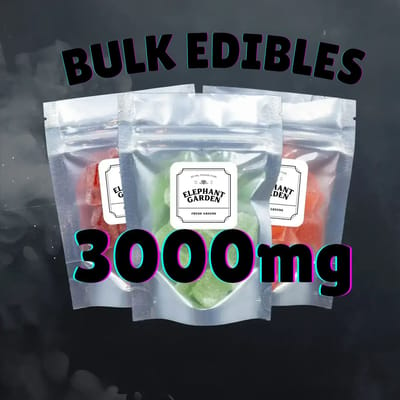
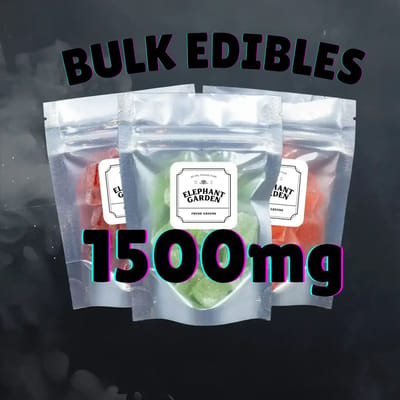
Bulk Edibles are made in-house by Elephant Garden — we have been producing them for 8+ years, well before the legal industry caught up. The ingredient list is short: gelatin, sugar, THC distillate, and organic flavouring. They are gluten-free and nut-free, with a rotating selection of delicious flavours. Pack sizes range from 250mg (10mg pieces) up to 3000mg (100mg pieces), which lets you match the format to your tolerance precisely.
New or cautious users: 10mg-per-piece Bulk packs (the 250mg 25-pack or 1500mg 50-pack) — small, predictable doses inside a larger value-priced bag.
High-tolerance veterans: 100mg-per-piece Bulk packs (the 1000mg 10-pack or 3000mg 30-pack) — fewer pieces, higher individual dose, simpler dosing math.
Flavour-first shoppers: Drip Edibles 750mg or 1500mg packs for authentic candy flavour with precise THC dosing.
Mixed households: An edibles bundle with both Drip and Bulk packs covers everyone.
What About CBD and Mixed-Cannabinoid Packs?
The co-pack reform applies across the board, which is why you’re now seeing larger CBD edibles formats too. Our 5000mg CBD Bulk Gummies (50 pack, 100mg per piece) is a format that would have been illegal to retail in a single package a year ago — now it’s just one labelled, child-resistant bag.
If you are exploring CBD edibles for the first time, our breakdown of CBD gummies vs THC gummies covers the practical differences in how each may affect you, and what research suggests about CBD’s potential role in stress, sleep, and recovery routines (note: this is educational, not medical advice).
The March 2026 reform is real progress, but the industry is not standing still. The remaining sticking points:
1. The 10mg Per-Piece Cap
The Cannabis Council of Canada’s edibles caucus has formally requested that Health Canada raise the per-piece cap. The Competition Bureau echoed the call in its 2025 cannabis competition review, framing the cap as a barrier that pushes consumers to illicit sellers. StratCann’s coverage notes that no other major legal market — not Colorado, Washington, California, or Oregon — caps per-piece THC at 10mg. The Canadian limit is an outlier.
2. Tax Stacking on Edibles
Edibles in Canada are subject to the federal excise tax on a per-mg basis. As multi-pack THC totals climb, so does the per-package excise burden. The math eventually catches up with the savings unless excise reforms keep pace.
3. Provincial Variability
Each province sets its own retail rules on top of the federal framework. BC private retail (which is where most online cannabis flows) tends to move quickly to stock new SKUs; some Crown markets in other provinces are slower. If you live in BC, you’ll see the new formats in market faster than most of the country.
A short checklist for getting the most out of the new rules:
Always check total THC and per-piece THC. A “100mg pack” can be 10 pieces of 10mg or 1 piece of 100mg (the latter is still illegal at retail in Canada — if you see it from an unlicensed source, that’s a red flag).
Calculate dollar-per-mg before you buy. A 30-pack of 100mg pieces (3000mg total) is almost always cheaper per mg than a 25-pack of 10mg pieces (250mg total), even though the latter has more units.
Start low when in doubt. If it’s been more than 6 months since your last edible, tolerance has reset more than you think. Start with 5mg and wait two hours.
Store properly. Multi-piece packs are resealable, but heat and humidity still degrade THC over time. Cool, dark, dry — and keep them away from kids and pets.
Buy from licensed sources. The legal market now competes on price and format. Illicit “100mg single gummies” carry real risks: no dosing precision, no allergen disclosure, no recall mechanism.
Frequently Asked Questions
Are 100mg edibles legal in Canada now?
A 100mg single piece is not legal. A package containing multiple pieces that total 100mg or more of THC is now legal as of the March 2026 reform — as long as each individual piece stays at or below 10mg. That is the entire substance of the rule change.
What is the maximum THC per package in Canada in 2026?
There is no longer a hard federal cap on total THC per package, provided each piece is capped at 10mg and labelling/child-resistance requirements are met. Most retail packs you’ll see in BC are in the 250mg to 5000mg range.
Why is BC’s edibles category growing so fast?
Headset’s April 2026 data shows BC edibles up 34.6% YoY. The biggest driver is the shift to multi-piece packs: shoppers are buying fewer packages but each one contains more THC, so dollar sales (+38.7%) climbed even as unit counts (-19.3%) dropped. The new co-pack rules made larger formats viable at retail.
What’s the difference between Drip Edibles and Bulk Edibles?
Drip Edibles are real candy-store candies infused with D9 THC distillate — think familiar candy textures and flavours, dosed precisely. Bulk Edibles are made in-house by Elephant Garden for 8+ years using gelatin, sugar, THC distillate, and organic flavouring; they are gluten-free and nut-free with a rotating selection of delicious flavours.
Will the per-piece 10mg cap change?
The Cannabis Council of Canada’s edibles caucus and the Competition Bureau are lobbying Health Canada to raise it. No timeline has been announced. For now, the cap remains 10mg per piece, and the 100mg-plus reforms apply at the package level only.
How should new users approach a 50-piece bag of 10mg gummies?
The same way they’d approach a single 10mg piece — start with 5mg (half a piece), wait two hours, and adjust from there. The advantage of the multi-pack format is that the remaining 49 pieces are dosed identically, so you can build up gradually with confidence in the math.
Are multi-pack edibles cheaper per milligram?
Almost always, yes. The packaging tax under the old single-piece-per-bag rule pushed per-mg pricing up for years. With co-pack reform, brands consolidate printing, filling, and labelling costs into one package, and most of those savings show up at retail.
Shop the New Multi-Pack Edibles Era
Whether you are a returning user from the 10mg era, a value buyer doing the per-mg math, or just curious about what the rule change means for your cabinet, the format options are wider than they have ever been in Canada. Browse our full edibles category, the CBD edibles section, or our edibles bundles to mix Drip and Bulk packs in one order.
Elephant Garden delivers cannabis across Canada with discreet packaging and tracked shipping — check out our cannabis delivery hub for ETAs and shipping details in your province.
The 100mg Edible Era: What Canada New Multi-Pack Rules Mean for BC Buyers
TL;DR (2026): Health Canada’s March 2026 update keeps the per-piece cap at 10mg THC, but Canada’s new co-packaging rules now allow a single bag, tin, or jar to hold multiple pieces totalling 100mg+ of THC. That ends the “one tiny gummy per bag” packaging tax, and it’s a big reason BC edibles dollar sales jumped 38.7% in April 2026 even as unit counts dipped. The 10mg per-piece ceiling still exists, and the Cannabis Council of Canada’s edibles caucus is still lobbying to raise it. Here’s what actually changed for BC buyers, what didn’t, and how to shop smarter under the new rules.
What Actually Changed in March 2026?
The federal cannabis edibles framework got its first meaningful update since 2019. Here is the short version:
If you bought edibles in Canada between 2019 and early 2026, you probably remember the absurdity. One 10mg gummy in a giant plastic clamshell. A second 10mg gummy in another clamshell. Five clamshells stapled to a paperboard sleeve to make a “pack.” That was the workaround the entire legal industry was forced into to stay compliant.
The 2026 update kills the workaround. Brands and retailers can now ship a single bag of ten 10mg gummies as one package — the way every grey-market vendor has done it for years. It is, as THC Canada notes, the most consumer-friendly change to legal edibles since legalization.
What the Rule Change Doesn’t Do
It is important to be precise about this because confusion is everywhere online. The 10mg per-piece limit did not change.
For experienced consumers — including medical users and people with a high tolerance — this is the source of ongoing frustration. StratCann reporting highlights that the Cannabis Council of Canada’s edibles caucus, along with the Competition Bureau, has been openly lobbying Health Canada to raise the per-piece cap. Their argument: the 10mg ceiling pushes high-tolerance users to illicit sellers who freely sell 100mg, 250mg, and 500mg single-piece edibles. The co-pack reform is a step toward parity, but it is not a finish line.
Why This Matters for BC Buyers in 2026
British Columbia is one of the most price-sensitive cannabis markets in Canada. According to Headset’s April 2026 data, the BC edibles category grew 34.6% year-over-year, with gummies leading the pack. The really interesting number, though, is the split between dollars and units:
Same market, more money, fewer transactions. The translation is simple: BC shoppers are buying fewer packages, but each package is bigger, more potent, and better value per milligram. That is exactly what the co-pack reform was designed to produce.
The Dollar-per-Milligram Shift
The old packaging tax was real money. Brands had to print, fill, label, and ship a child-resistant container for every 10mg of THC. That cost cascaded into the per-mg price you paid at checkout.
Under the new rules, a brand can fit 50, 100, or even 500mg of THC into one package with the same printing and filling cost. The packaging tax collapses. The savings flow downstream, and consumers respond by trading up to larger formats. It is the same pattern the United States saw when multi-piece edible packs became legal across mature state markets — bigger packs, lower price per milligram, fewer trips to the store.
For value buyers, this is the biggest practical change to the Canadian edibles market since 2019. Our bulk edibles primer walks through the dollar-per-mg math in more detail.
What “Better Value Per Milligram” Looks Like in Practice
At Elephant Garden, the multi-pack format is something we have offered for years — our in-house Bulk Edibles line was built precisely for high-tolerance and value-focused shoppers. Each pack contains a rotating selection of delicious flavours, precisely dosed with THC distillate. The 50-piece packs are now the format most shoppers reach for.
1500mg THC Bulk Edibles 50 Pack (30mg dose)
Introducing our 50 pack of 30mg THC Infused Edibles — a premium collection of precisely...
+3000mg THC Bulk Edibles 30 Pack (100mg dose)
Introducing our 30 pack of 100mg THC Infused Edibles — a premium collection of high-potency...
+The Returning User Problem (And Why 100mg Packs Solve It)
One of the under-discussed effects of the 10mg-per-package era was attrition. Plenty of Canadians tried edibles in 2019 and 2020, bought a single 10mg piece, took 5mg, didn’t feel anything in 45 minutes, took the other 5mg, and a couple of hours later had a memorably uncomfortable evening. They never came back.
The 100mg multi-pack format helps in three ways:
If you are new to edibles or returning after a break, read our edibles dosing guide and how long edibles take to kick in before you start. Both pieces are written for the 100mg-pack era.
Drip Edibles vs. Bulk Edibles: Two Approaches to the New Rules
Within the 100mg-pack format, there are two distinct product categories worth understanding.
Drip Edibles
Drip Edibles are real, name-brand candy-store candies infused with D9 THC distillate. Think of the candies you grew up with — gummies, sours, chocolate-coated treats — dosed precisely with THC and sold in dose-controlled packs. The appeal is flavour fidelity: nothing in the texture or taste signals “cannabis.” Drip Edibles come in 750mg and 1500mg pack sizes.
Bulk Edibles
Bulk Edibles are made in-house by Elephant Garden — we have been producing them for 8+ years, well before the legal industry caught up. The ingredient list is short: gelatin, sugar, THC distillate, and organic flavouring. They are gluten-free and nut-free, with a rotating selection of delicious flavours. Pack sizes range from 250mg (10mg pieces) up to 3000mg (100mg pieces), which lets you match the format to your tolerance precisely.
D9 THC Drip Edibles (750mg & 1500mg)
Drip into flavour paradise with pure Delta-9 THC! Real candy-store candies infused with D9 THC...
+1000mg THC Bulk Edibles 10 Pack (100mg dose)
Introducing our 10 pack of 100mg THC Infused Edibles — a premium collection of high-potency...
+Which Format Fits the New Rules Best?
What About CBD and Mixed-Cannabinoid Packs?
The co-pack reform applies across the board, which is why you’re now seeing larger CBD edibles formats too. Our 5000mg CBD Bulk Gummies (50 pack, 100mg per piece) is a format that would have been illegal to retail in a single package a year ago — now it’s just one labelled, child-resistant bag.
If you are exploring CBD edibles for the first time, our breakdown of CBD gummies vs THC gummies covers the practical differences in how each may affect you, and what research suggests about CBD’s potential role in stress, sleep, and recovery routines (note: this is educational, not medical advice).
What’s Still Broken (And What Might Change Next)
The March 2026 reform is real progress, but the industry is not standing still. The remaining sticking points:
1. The 10mg Per-Piece Cap
The Cannabis Council of Canada’s edibles caucus has formally requested that Health Canada raise the per-piece cap. The Competition Bureau echoed the call in its 2025 cannabis competition review, framing the cap as a barrier that pushes consumers to illicit sellers. StratCann’s coverage notes that no other major legal market — not Colorado, Washington, California, or Oregon — caps per-piece THC at 10mg. The Canadian limit is an outlier.
2. Tax Stacking on Edibles
Edibles in Canada are subject to the federal excise tax on a per-mg basis. As multi-pack THC totals climb, so does the per-package excise burden. The math eventually catches up with the savings unless excise reforms keep pace.
3. Provincial Variability
Each province sets its own retail rules on top of the federal framework. BC private retail (which is where most online cannabis flows) tends to move quickly to stock new SKUs; some Crown markets in other provinces are slower. If you live in BC, you’ll see the new formats in market faster than most of the country.
For a fuller view of every 2026 rule change BC shoppers should know, see our 2026 cannabis regulatory reset guide.
How to Shop Smart in the 100mg Era
A short checklist for getting the most out of the new rules:
Frequently Asked Questions
Are 100mg edibles legal in Canada now?
A 100mg single piece is not legal. A package containing multiple pieces that total 100mg or more of THC is now legal as of the March 2026 reform — as long as each individual piece stays at or below 10mg. That is the entire substance of the rule change.
What is the maximum THC per package in Canada in 2026?
There is no longer a hard federal cap on total THC per package, provided each piece is capped at 10mg and labelling/child-resistance requirements are met. Most retail packs you’ll see in BC are in the 250mg to 5000mg range.
Why is BC’s edibles category growing so fast?
Headset’s April 2026 data shows BC edibles up 34.6% YoY. The biggest driver is the shift to multi-piece packs: shoppers are buying fewer packages but each one contains more THC, so dollar sales (+38.7%) climbed even as unit counts (-19.3%) dropped. The new co-pack rules made larger formats viable at retail.
What’s the difference between Drip Edibles and Bulk Edibles?
Drip Edibles are real candy-store candies infused with D9 THC distillate — think familiar candy textures and flavours, dosed precisely. Bulk Edibles are made in-house by Elephant Garden for 8+ years using gelatin, sugar, THC distillate, and organic flavouring; they are gluten-free and nut-free with a rotating selection of delicious flavours.
Will the per-piece 10mg cap change?
The Cannabis Council of Canada’s edibles caucus and the Competition Bureau are lobbying Health Canada to raise it. No timeline has been announced. For now, the cap remains 10mg per piece, and the 100mg-plus reforms apply at the package level only.
How should new users approach a 50-piece bag of 10mg gummies?
The same way they’d approach a single 10mg piece — start with 5mg (half a piece), wait two hours, and adjust from there. The advantage of the multi-pack format is that the remaining 49 pieces are dosed identically, so you can build up gradually with confidence in the math.
Are multi-pack edibles cheaper per milligram?
Almost always, yes. The packaging tax under the old single-piece-per-bag rule pushed per-mg pricing up for years. With co-pack reform, brands consolidate printing, filling, and labelling costs into one package, and most of those savings show up at retail.
Shop the New Multi-Pack Edibles Era
Whether you are a returning user from the 10mg era, a value buyer doing the per-mg math, or just curious about what the rule change means for your cabinet, the format options are wider than they have ever been in Canada. Browse our full edibles category, the CBD edibles section, or our edibles bundles to mix Drip and Bulk packs in one order.
Supreme Bulk Bundle - 10 x 1500mg - 50 x 30mg
Our biggest bundle. Purchase 10 packs of our premium 1500mg THC edibles, each containing 50...
+Jumbo Bulk Bundle - 5 x 1500mg - 50 x 30mg
Go big with our Jumbo Bulk Bundle featuring 5 packages of our premium 1500mg THC...
+Elephant Garden delivers cannabis across Canada with discreet packaging and tracked shipping — check out our cannabis delivery hub for ETAs and shipping details in your province.