Making your own cannabis edibles at home is one of the most rewarding ways to enjoy THC. Instead of guessing what is in a store-bought product, you control the strain, the dose, and the flavour. Whether you want to bake a batch of classic brownies, drizzle cannabis-infused oil over pasta, or whip up a no-bake treat, the process starts with the same essential science: decarboxylation.
This guide walks you through everything you need to know about cooking with cannabis in Canada — from the chemistry behind activating THC to simple, beginner-friendly recipes you can make at home today. We will cover dosing calculations so you know exactly how many milligrams are in each serving, plus safety tips to keep the experience enjoyable for everyone.
Raw cannabis flower contains THCA (tetrahydrocannabinolic acid), a non-psychoactive precursor to THC. If you simply toss ground flower into brownie batter and bake it, you will not get the effects you are after. THCA must be converted into THC through a process called decarboxylation, essentially, applying heat to remove a carboxyl group from the molecule.
When you smoke or vape cannabis, decarboxylation happens instantly from the flame or heating element. In cooking, you need to do this step deliberately before infusing your fat.
How to Decarboxylate Cannabis at Home
Preheat your oven to 110°C (230°F). Use an oven thermometer for accuracy, most home ovens fluctuate by 10-15 degrees.
Break up your flower into small, pea-sized pieces. Do not grind it into a fine powder, this pushes plant material through your strainer later and adds a bitter, chlorophyll taste.
Spread evenly on a parchment-lined baking sheet in a single layer.
Bake for 35-45 minutes, gently stirring once halfway through. The flower should turn from green to a light golden-brown colour.
Let it cool completely before handling. The cannabis is now “activated” and ready to infuse into butter or oil.
Common mistakes to avoid:
Temperature too high: Anything above 150°C (300°F) starts to degrade THC and destroy terpenes. Keep it low and slow.
Skipping decarboxylation entirely: This is the most common beginner error and results in edibles with almost no psychoactive effect.
Grinding too finely: A coarse hand-break is ideal. Fine grinding leads to gritty, bitter-tasting final products.
If you are curious about how different terpenes in your chosen strain affect the flavour and experience of your edibles, our complete guide to cannabis terpenes breaks it all down.
Cannabis Dosing Math: How to Calculate THC Per Serving
The biggest advantage of cooking at home is knowing exactly what is in each serving. Here is the formula:
(Grams of flower) x (THC percentage as a decimal) x 1,000 = Total mg of THC
Then divide by the number of servings in your recipe to get milligrams per serving.
Example Calculation
Say you are using 7 grams of flower that tests at 20% THC:
7 g x 0.20 x 1,000 = 1,400 mg of THC total
Factor in roughly 80-90% extraction efficiency for butter/oil infusions: 1,400 x 0.85 = 1,190 mg of usable THC
Divide into 24 brownies: 1,190 / 24 = ~50 mg per brownie
Important: 50 mg is a strong dose. For beginners, Health Canada and most cannabis educators recommend starting at 2.5 to 5 mg of THC per serving. You can always use less flower or cut your recipe into more servings to bring the dose down.
Dosing Tiers at a Glance
Dose Range
Experience Level
What to Expect
1-2.5 mg
Microdose / Beginner
Subtle mood lift, mild relaxation
5-10 mg
Light / Occasional user
Noticeable euphoria, moderate body relaxation
10-25 mg
Experienced
Strong euphoria, significant body effects
25-50 mg
High tolerance
Very strong effects, not for beginners
For a deeper dive into how edible dosing works and how to find the right amount for your tolerance, check out our edibles dosing guide. Interested in microdosing? Our microdosing cannabis guide covers how to start with ultra-low doses.
Recipe 1: Classic Cannabutter
Cannabutter is the foundation of most cannabis-infused baking. Once you have a batch in the fridge, you can use it anywhere regular butter goes — in brownies, cookies, on toast, or stirred into pasta sauce.
Ingredients
1 cup (227 g) unsalted butter
7-10 grams decarboxylated cannabis flower
1 cup water
Instructions
Melt the butter with the water in a saucepan or slow cooker on low heat. The water prevents the butter from scorching and will separate out later.
Add the decarboxylated flower and stir to combine.
Simmer on low heat (70-85°C / 160-185°F) for 2-3 hours, stirring every 30 minutes. Never let it boil — high heat destroys THC.
Strain through cheesecloth or a fine mesh strainer into a glass jar. Squeeze gently — do not press hard, as this forces bitter chlorophyll into your butter.
Refrigerate overnight. The butter will solidify on top of the water. Lift it off, discard the water, and pat the butter dry.
Storage: Cannabutter keeps for 2-4 weeks in the fridge or up to 6 months in the freezer. Label it clearly and keep it away from children and pets.
Pro tip: The strain you choose affects the flavour and experience of your cannabutter. Earthy, piney indicas pair well with rich chocolate recipes, while citrusy sativas complement lighter baked goods and breakfast dishes. Browse our full flower selection to find the right starting point.
Coconut oil is an excellent alternative to butter for cannabis infusions. It has a higher concentration of saturated fat, which binds more efficiently with cannabinoids. It is also vegan, dairy-free, and works beautifully in both sweet and savoury recipes.
Ingredients
1 cup virgin coconut oil
7-10 grams decarboxylated cannabis flower
Instructions
Melt the coconut oil in a saucepan over low heat or use a slow cooker on the “low” setting.
Add the decarboxylated cannabis and stir well.
Maintain a temperature of 70-85°C (160-185°F) for 2-3 hours, stirring occasionally. A candy thermometer or instant-read thermometer is helpful here.
Strain through cheesecloth into a clean glass jar. Unlike butter, there is no water to separate — the oil is ready to use once cooled.
Store in the fridge (solidifies) or at room temperature (stays liquid above 24°C / 76°F). Keeps for up to 2 months refrigerated.
Why coconut oil? Research published in various food science journals suggests that medium-chain triglycerides (MCTs) found abundantly in coconut oil may offer higher bioavailability for cannabinoids compared to some other fats. This means your body may absorb more THC per milligram — so you might need a slightly lower dose when using coconut oil compared to butter.
Recipe 3: THC-Infused Chocolate Brownies
This is the classic cannabis edible for a reason. Rich, fudgy, and dead simple to make. Use your homemade cannabutter or cannabis coconut oil as the fat.
Ingredients
1/2 cup cannabutter or cannabis coconut oil
1 cup granulated sugar
2 large eggs
1 teaspoon vanilla extract
1/3 cup cocoa powder
1/2 cup all-purpose flour
1/4 teaspoon salt
1/4 teaspoon baking powder
Instructions
Preheat your oven to 175°C (350°F). Line an 8×8 inch baking pan with parchment paper.
Melt the cannabutter (or cannabis coconut oil) and mix with sugar until well combined.
Beat in the eggs one at a time, then add vanilla extract.
In a separate bowl, whisk together cocoa powder, flour, salt, and baking powder.
Fold the dry ingredients into the wet mixture. Do not overmix — just stir until the flour disappears.
Pour into the prepared pan and spread evenly.
Bake for 20-25 minutes. The edges should be set but the centre should still be slightly soft.
Let cool completely before cutting into 12-16 pieces.
Dosing note: If your cannabutter was made with 7 g of 20% THC flower (roughly 1,190 mg usable THC per cup), and this recipe uses half a cup, the entire batch contains about 595 mg. Cut into 12 pieces, that is roughly 50 mg per brownie — a strong dose. Cut into 24 smaller pieces for ~25 mg each, or use less cannabutter mixed with regular butter to bring the dose down further.
Not every edible has to be sweet. This cannabis-infused garlic bread is perfect as a side dish or appetizer, and it takes less than 15 minutes to prepare.
Ingredients
1 French baguette or Italian bread loaf
3-4 tablespoons cannabutter (softened to room temperature)
3-4 cloves garlic, minced
2 tablespoons fresh parsley, finely chopped
Pinch of salt and freshly ground black pepper
Optional: grated Parmesan cheese
Instructions
Preheat your oven to 190°C (375°F).
Mix the softened cannabutter with minced garlic, parsley, salt, and pepper until well combined.
Slice the bread in half lengthwise and spread the cannabis garlic butter evenly over both cut sides.
Sprinkle with Parmesan cheese if desired.
Wrap loosely in aluminium foil and bake for 10-12 minutes. Open the foil for the last 2 minutes to crisp the top.
Slice into portions and serve warm.
Dosing tip: Because it is easy to eat multiple slices, keep the cannabutter dose conservative. Consider mixing 1 tablespoon of cannabutter with 2-3 tablespoons of regular butter to keep each slice in the 5-10 mg range.
No oven required for this one. These rich, velvety truffles are perfect for precise dosing because you can control the size of each piece exactly.
Ingredients
200 g dark chocolate (70% cocoa or higher), chopped
1/2 cup heavy cream
2 tablespoons cannabis coconut oil
Cocoa powder, crushed nuts, or shredded coconut for rolling
Instructions
Heat the heavy cream in a small saucepan until it just begins to simmer (do not boil).
Pour the hot cream over the chopped chocolate in a bowl. Let it sit for 2 minutes, then stir slowly until completely smooth.
Add the cannabis coconut oil and stir until fully incorporated.
Cover and refrigerate for 2-3 hours until the ganache is firm enough to scoop.
Use a small spoon or melon baller to scoop uniform portions. Roll each one into a ball with your hands.
Roll in cocoa powder, crushed nuts, or shredded coconut.
Store in the fridge in an airtight container for up to 2 weeks.
Dosing advantage: Because you are scooping individual truffles, you have excellent control over serving size. If your cannabis coconut oil contains 600 mg of THC per cup and you use 2 tablespoons (roughly 1/8 cup = 75 mg), dividing the batch into 15 truffles gives you about 5 mg per truffle — a perfect beginner-friendly dose.
Essential Tips for Cooking with Cannabis
Temperature Control Is Everything
THC begins to degrade above 150°C (300°F), and terpenes — which contribute flavour and may influence the overall experience — start evaporating at even lower temperatures. Always infuse your butter or oil on low heat, and when baking, keep your oven at or below 175°C (350°F). The THC is already dissolved in the fat, so your edibles will still be potent even at moderate baking temperatures.
Edibles Hit Differently Than Smoking
When you eat cannabis, your liver converts THC into 11-hydroxy-THC, a metabolite that crosses the blood-brain barrier more efficiently than regular THC. This is why edibles often feel stronger and last longer — typically 4 to 8 hours — compared to smoking, which peaks within minutes and fades after 1-2 hours. For a detailed breakdown of edible onset times and duration, see our guide on how long edibles take to kick in.
Start Low, Go Slow
This is the golden rule of edibles. Start with 2.5-5 mg for your first time, wait at least 2 full hours before taking more, and never increase your dose impatiently. Edible onset can take anywhere from 30 minutes to 2 hours depending on your metabolism, what you have eaten that day, and your individual body chemistry.
Label Everything Clearly
Cannabis-infused butter, oil, and baked goods should be clearly labelled with the estimated THC content per serving and stored separately from regular food. This is especially critical if you live with children, elderly family members, or anyone who might accidentally consume them. Keep all cannabis edibles in a locked or clearly marked container.
Choosing the Right Strain for Cooking
The strain you start with affects the flavour, aroma, and experience of your edibles. As a general guideline:
Indica strains tend to produce more body-focused, relaxing effects in edibles — ideal for evening treats or sleep-oriented recipes.
Sativa strains may offer more uplifting, energising effects — better suited for daytime edibles or social gatherings.
Hybrid strains give you a blend of both — versatile for any recipe.
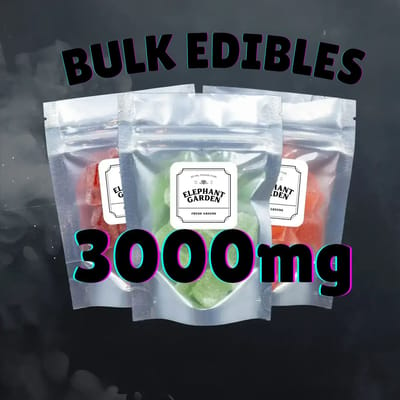
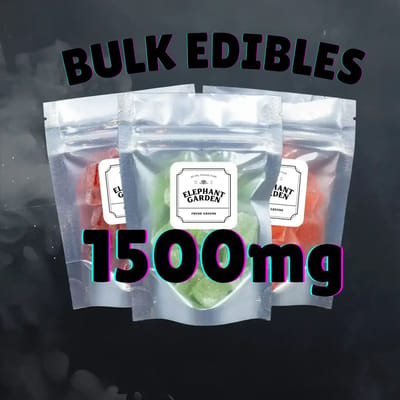
Cooking with cannabis is a rewarding project, but it is not for everyone. If you prefer precisely dosed edibles without the prep work, Elephant Garden carries a wide selection of THC edibles — from bulk gummy packs to infused candies — all made with THC distillate and available in a range of dose sizes.
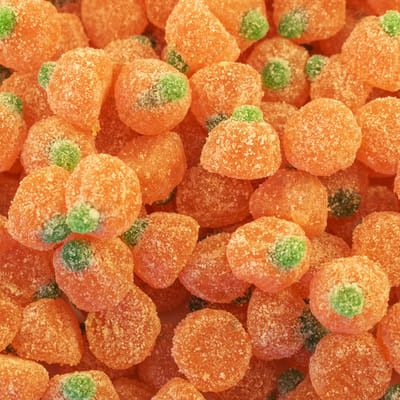
Our bulk edibles have been made in-house for over 8 years and come in a rotating selection of delicious flavours. They are gluten-free, nut-free, and precisely dosed so you know exactly what you are getting in each piece.
Can You Cook with Cannabis Concentrates Instead of Flower?
Yes. Cannabis concentrates like hash, shatter, or distillate can be used in cooking. Distillate is the easiest because it is already decarboxylated — you can stir it directly into melted butter or oil. Hash and shatter need to be decarbed first (same temperature, slightly shorter time) and then dissolved into warm fat. Concentrates produce a cleaner flavour than flower since there is less plant material involved.
How Long Do Homemade Cannabis Edibles Last?
Cannabutter keeps for 2-4 weeks in the fridge and up to 6 months in the freezer. Cannabis-infused coconut oil lasts up to 2 months refrigerated. Baked goods like brownies last 3-5 days at room temperature in an airtight container, or up to 3 months frozen. Always label with the date and estimated THC content per serving.
Why Did My Edibles Not Work?
The most common reason is skipping or improperly doing the decarboxylation step. Other culprits include overheating during infusion (which degrades THC), not using enough fat for the THC to bind to, or simply not waiting long enough — edibles can take up to 2 hours to kick in. Make sure you are using an oven thermometer and following the time and temperature guidelines carefully.
Is It Legal to Make Cannabis Edibles at Home in Canada?
Yes. Under the Cannabis Act, adults in Canada can make cannabis edibles at home for personal use, provided they use legally obtained cannabis (or home-grown plants, up to the 4-plant household limit in most provinces). You cannot sell homemade edibles, and there are no restrictions on the potency of edibles you make for yourself.
What Is the Best Fat for Cannabis Infusion?
Butter and coconut oil are the two most popular choices. Coconut oil has a slightly higher saturated fat content, which may bind cannabinoids more efficiently. Butter offers a richer flavour that works beautifully in baked goods. Olive oil is another option for savoury dishes like pasta or salad dressings, though it has a lower smoke point, so it requires more careful temperature management during infusion.
Start Cooking — or Skip Straight to the Good Stuff
Whether you are a home chef ready to experiment with cannabis flower and cannabutter, or you prefer the convenience of precisely dosed, ready-to-eat edibles, Elephant Garden has you covered. Our edibles collection includes a full range of THC and CBD gummies, while our flower selection gives you the raw material for any recipe in this guide.
We ship discreetly across Canada with fast, reliable delivery. Browse our full menu, grab what you need, and get cooking — or sit back and let our edibles do the work for you.
Cannabis Cooking: Easy THC-Infused Recipes for Beginners
Making your own cannabis edibles at home is one of the most rewarding ways to enjoy THC. Instead of guessing what is in a store-bought product, you control the strain, the dose, and the flavour. Whether you want to bake a batch of classic brownies, drizzle cannabis-infused oil over pasta, or whip up a no-bake treat, the process starts with the same essential science: decarboxylation.
This guide walks you through everything you need to know about cooking with cannabis in Canada — from the chemistry behind activating THC to simple, beginner-friendly recipes you can make at home today. We will cover dosing calculations so you know exactly how many milligrams are in each serving, plus safety tips to keep the experience enjoyable for everyone.
What Is Decarboxylation (and Why Does It Matter)?
Raw cannabis flower contains THCA (tetrahydrocannabinolic acid), a non-psychoactive precursor to THC. If you simply toss ground flower into brownie batter and bake it, you will not get the effects you are after. THCA must be converted into THC through a process called decarboxylation, essentially, applying heat to remove a carboxyl group from the molecule.
When you smoke or vape cannabis, decarboxylation happens instantly from the flame or heating element. In cooking, you need to do this step deliberately before infusing your fat.
How to Decarboxylate Cannabis at Home
Common mistakes to avoid:
If you are curious about how different terpenes in your chosen strain affect the flavour and experience of your edibles, our complete guide to cannabis terpenes breaks it all down.
Cannabis Dosing Math: How to Calculate THC Per Serving
The biggest advantage of cooking at home is knowing exactly what is in each serving. Here is the formula:
(Grams of flower) x (THC percentage as a decimal) x 1,000 = Total mg of THC
Then divide by the number of servings in your recipe to get milligrams per serving.
Example Calculation
Say you are using 7 grams of flower that tests at 20% THC:
Important: 50 mg is a strong dose. For beginners, Health Canada and most cannabis educators recommend starting at 2.5 to 5 mg of THC per serving. You can always use less flower or cut your recipe into more servings to bring the dose down.
Dosing Tiers at a Glance
For a deeper dive into how edible dosing works and how to find the right amount for your tolerance, check out our edibles dosing guide. Interested in microdosing? Our microdosing cannabis guide covers how to start with ultra-low doses.
Recipe 1: Classic Cannabutter
Cannabutter is the foundation of most cannabis-infused baking. Once you have a batch in the fridge, you can use it anywhere regular butter goes — in brownies, cookies, on toast, or stirred into pasta sauce.
Ingredients
Instructions
Storage: Cannabutter keeps for 2-4 weeks in the fridge or up to 6 months in the freezer. Label it clearly and keep it away from children and pets.
Pro tip: The strain you choose affects the flavour and experience of your cannabutter. Earthy, piney indicas pair well with rich chocolate recipes, while citrusy sativas complement lighter baked goods and breakfast dishes. Browse our full flower selection to find the right starting point.
Recipe 2: Cannabis-Infused Coconut Oil
Coconut oil is an excellent alternative to butter for cannabis infusions. It has a higher concentration of saturated fat, which binds more efficiently with cannabinoids. It is also vegan, dairy-free, and works beautifully in both sweet and savoury recipes.
Ingredients
Instructions
Why coconut oil? Research published in various food science journals suggests that medium-chain triglycerides (MCTs) found abundantly in coconut oil may offer higher bioavailability for cannabinoids compared to some other fats. This means your body may absorb more THC per milligram — so you might need a slightly lower dose when using coconut oil compared to butter.
Recipe 3: THC-Infused Chocolate Brownies
This is the classic cannabis edible for a reason. Rich, fudgy, and dead simple to make. Use your homemade cannabutter or cannabis coconut oil as the fat.
Ingredients
Instructions
Dosing note: If your cannabutter was made with 7 g of 20% THC flower (roughly 1,190 mg usable THC per cup), and this recipe uses half a cup, the entire batch contains about 595 mg. Cut into 12 pieces, that is roughly 50 mg per brownie — a strong dose. Cut into 24 smaller pieces for ~25 mg each, or use less cannabutter mixed with regular butter to bring the dose down further.
Recipe 4: Cannabis Garlic Bread (Savoury Option)
Not every edible has to be sweet. This cannabis-infused garlic bread is perfect as a side dish or appetizer, and it takes less than 15 minutes to prepare.
Ingredients
Instructions
Dosing tip: Because it is easy to eat multiple slices, keep the cannabutter dose conservative. Consider mixing 1 tablespoon of cannabutter with 2-3 tablespoons of regular butter to keep each slice in the 5-10 mg range.
Recipe 5: No-Bake Cannabis Chocolate Truffles
No oven required for this one. These rich, velvety truffles are perfect for precise dosing because you can control the size of each piece exactly.
Ingredients
Instructions
Dosing advantage: Because you are scooping individual truffles, you have excellent control over serving size. If your cannabis coconut oil contains 600 mg of THC per cup and you use 2 tablespoons (roughly 1/8 cup = 75 mg), dividing the batch into 15 truffles gives you about 5 mg per truffle — a perfect beginner-friendly dose.
Essential Tips for Cooking with Cannabis
Temperature Control Is Everything
THC begins to degrade above 150°C (300°F), and terpenes — which contribute flavour and may influence the overall experience — start evaporating at even lower temperatures. Always infuse your butter or oil on low heat, and when baking, keep your oven at or below 175°C (350°F). The THC is already dissolved in the fat, so your edibles will still be potent even at moderate baking temperatures.
Edibles Hit Differently Than Smoking
When you eat cannabis, your liver converts THC into 11-hydroxy-THC, a metabolite that crosses the blood-brain barrier more efficiently than regular THC. This is why edibles often feel stronger and last longer — typically 4 to 8 hours — compared to smoking, which peaks within minutes and fades after 1-2 hours. For a detailed breakdown of edible onset times and duration, see our guide on how long edibles take to kick in.
Start Low, Go Slow
This is the golden rule of edibles. Start with 2.5-5 mg for your first time, wait at least 2 full hours before taking more, and never increase your dose impatiently. Edible onset can take anywhere from 30 minutes to 2 hours depending on your metabolism, what you have eaten that day, and your individual body chemistry.
Label Everything Clearly
Cannabis-infused butter, oil, and baked goods should be clearly labelled with the estimated THC content per serving and stored separately from regular food. This is especially critical if you live with children, elderly family members, or anyone who might accidentally consume them. Keep all cannabis edibles in a locked or clearly marked container.
Choosing the Right Strain for Cooking
The strain you start with affects the flavour, aroma, and experience of your edibles. As a general guideline:
Not sure which type suits you? Our indica vs sativa vs hybrid guide breaks down the differences in detail.
Prefer Ready-Made Edibles? Skip the Kitchen
Cooking with cannabis is a rewarding project, but it is not for everyone. If you prefer precisely dosed edibles without the prep work, Elephant Garden carries a wide selection of THC edibles — from bulk gummy packs to infused candies — all made with THC distillate and available in a range of dose sizes.
1500mg THC Bulk Edibles 50 Pack (30mg dose)
Introducing our 50 pack of 30mg THC Infused Edibles — a premium collection of precisely...
+500mg THC Edibles 50 Pack (10mg dose)
Introducing our 50 pack of 10mg THC Infused Edibles — a premium assorted mix featuring...
+Our bulk edibles have been made in-house for over 8 years and come in a rotating selection of delicious flavours. They are gluten-free, nut-free, and precisely dosed so you know exactly what you are getting in each piece.
250mg THC Bulk Edibles 25 Pack (10mg)
Introducing our 25 pack of 10mg THC Infused Edibles — a premium collection of precisely...
+150mg THC Edibles 5 Pack (30mg)
Introducing our 5 pack of 30mg THC Infused Edibles — the perfect starter pack. Precisely...
+Frequently Asked Questions
Can You Cook with Cannabis Concentrates Instead of Flower?
Yes. Cannabis concentrates like hash, shatter, or distillate can be used in cooking. Distillate is the easiest because it is already decarboxylated — you can stir it directly into melted butter or oil. Hash and shatter need to be decarbed first (same temperature, slightly shorter time) and then dissolved into warm fat. Concentrates produce a cleaner flavour than flower since there is less plant material involved.
How Long Do Homemade Cannabis Edibles Last?
Cannabutter keeps for 2-4 weeks in the fridge and up to 6 months in the freezer. Cannabis-infused coconut oil lasts up to 2 months refrigerated. Baked goods like brownies last 3-5 days at room temperature in an airtight container, or up to 3 months frozen. Always label with the date and estimated THC content per serving.
Why Did My Edibles Not Work?
The most common reason is skipping or improperly doing the decarboxylation step. Other culprits include overheating during infusion (which degrades THC), not using enough fat for the THC to bind to, or simply not waiting long enough — edibles can take up to 2 hours to kick in. Make sure you are using an oven thermometer and following the time and temperature guidelines carefully.
Is It Legal to Make Cannabis Edibles at Home in Canada?
Yes. Under the Cannabis Act, adults in Canada can make cannabis edibles at home for personal use, provided they use legally obtained cannabis (or home-grown plants, up to the 4-plant household limit in most provinces). You cannot sell homemade edibles, and there are no restrictions on the potency of edibles you make for yourself.
What Is the Best Fat for Cannabis Infusion?
Butter and coconut oil are the two most popular choices. Coconut oil has a slightly higher saturated fat content, which may bind cannabinoids more efficiently. Butter offers a richer flavour that works beautifully in baked goods. Olive oil is another option for savoury dishes like pasta or salad dressings, though it has a lower smoke point, so it requires more careful temperature management during infusion.
Start Cooking — or Skip Straight to the Good Stuff
Whether you are a home chef ready to experiment with cannabis flower and cannabutter, or you prefer the convenience of precisely dosed, ready-to-eat edibles, Elephant Garden has you covered. Our edibles collection includes a full range of THC and CBD gummies, while our flower selection gives you the raw material for any recipe in this guide.
We ship discreetly across Canada with fast, reliable delivery. Browse our full menu, grab what you need, and get cooking — or sit back and let our edibles do the work for you.